
Seed Sovereignty
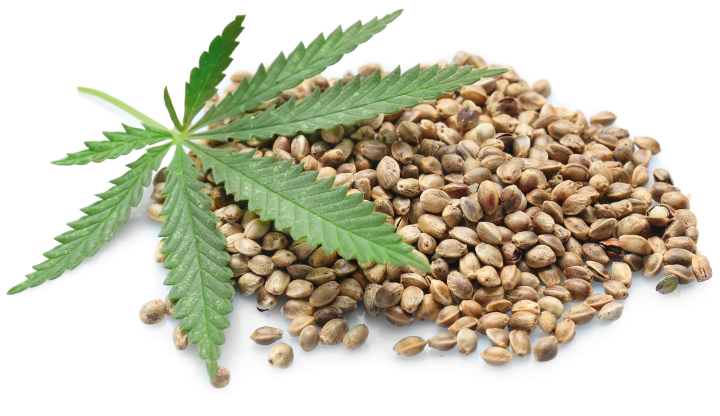
Tribal farmers on the White Earth Reservation are cultivating a diverse range of hemp varieties, including feral hemp, to expand regional seed diversity and develop strains specifically suited to a northern climate and landscape—for housing materials, textiles, and other fiber applications.
In partnership with the University of Minnesota, we are trialing northern varieties sourced from Russia and collaborating with farmers across Northern Plains Tribal lands to strengthen hemp cultivation throughout the region.
The vision is clear: to reclaim and steward our own seed supply—to ensure that the genetics shaping our homes, economies, and futures are rooted in our lands and under our care.
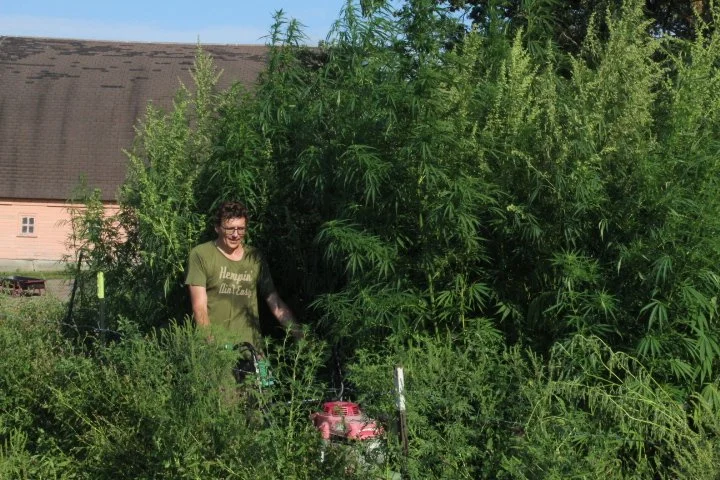
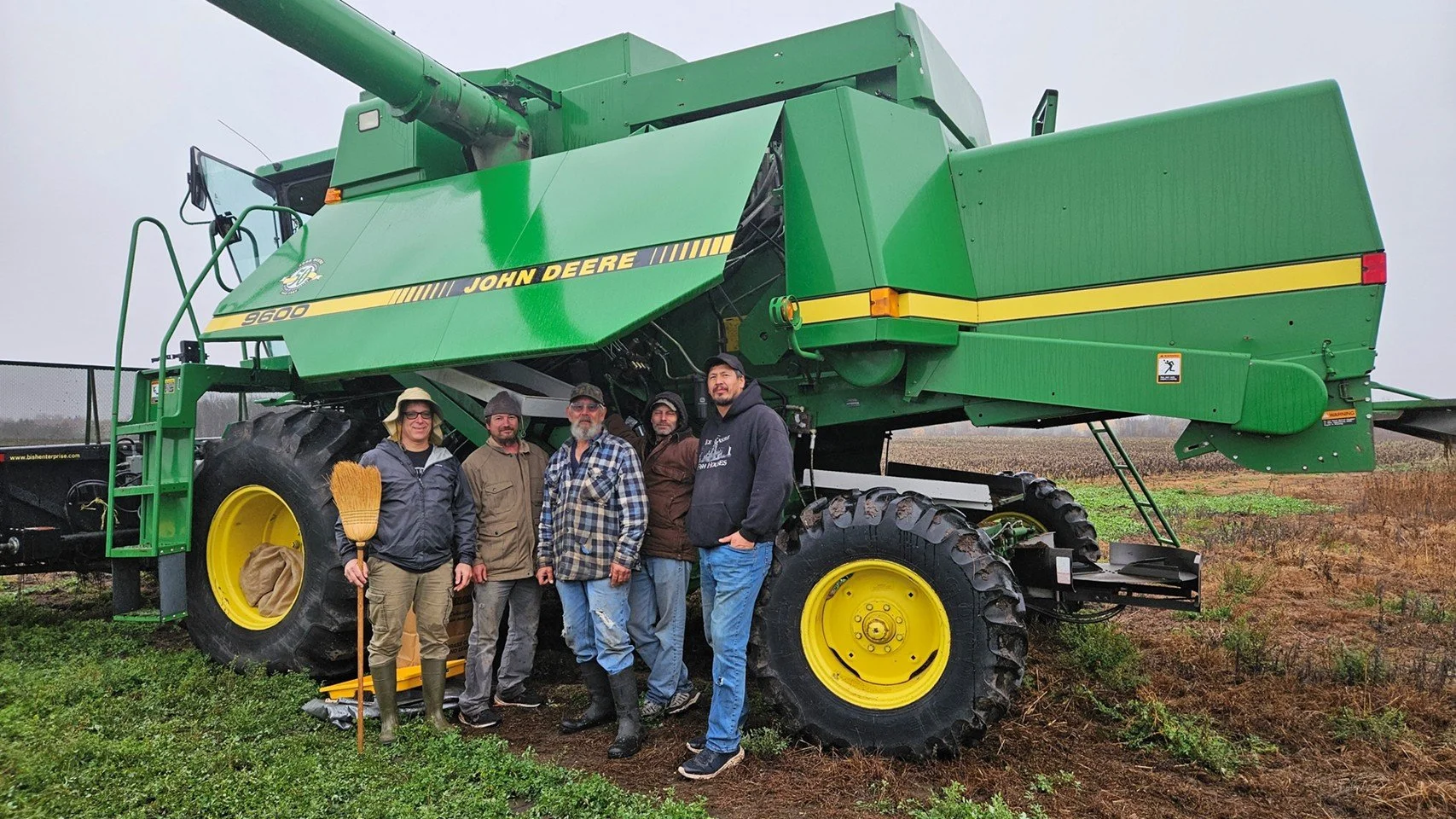
George in his hemp Feild
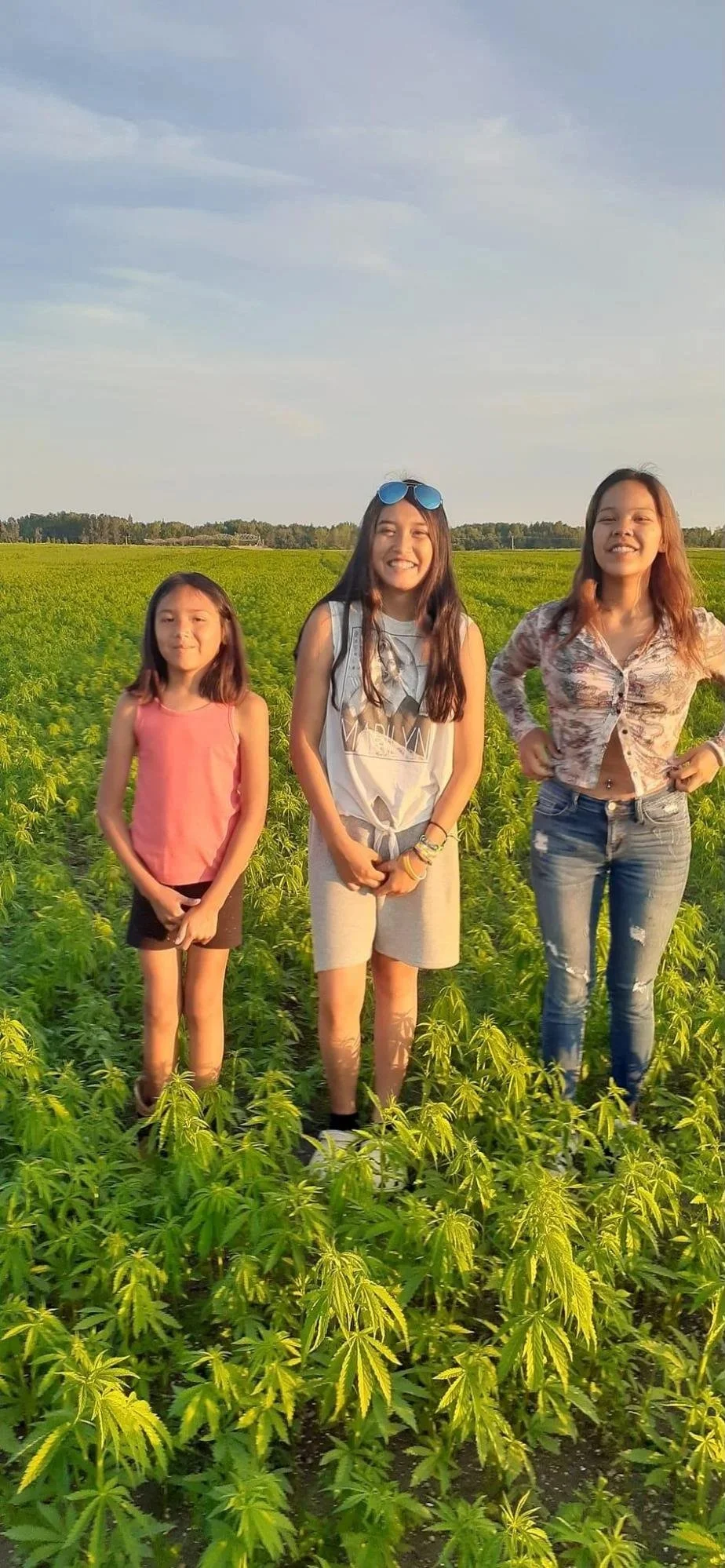
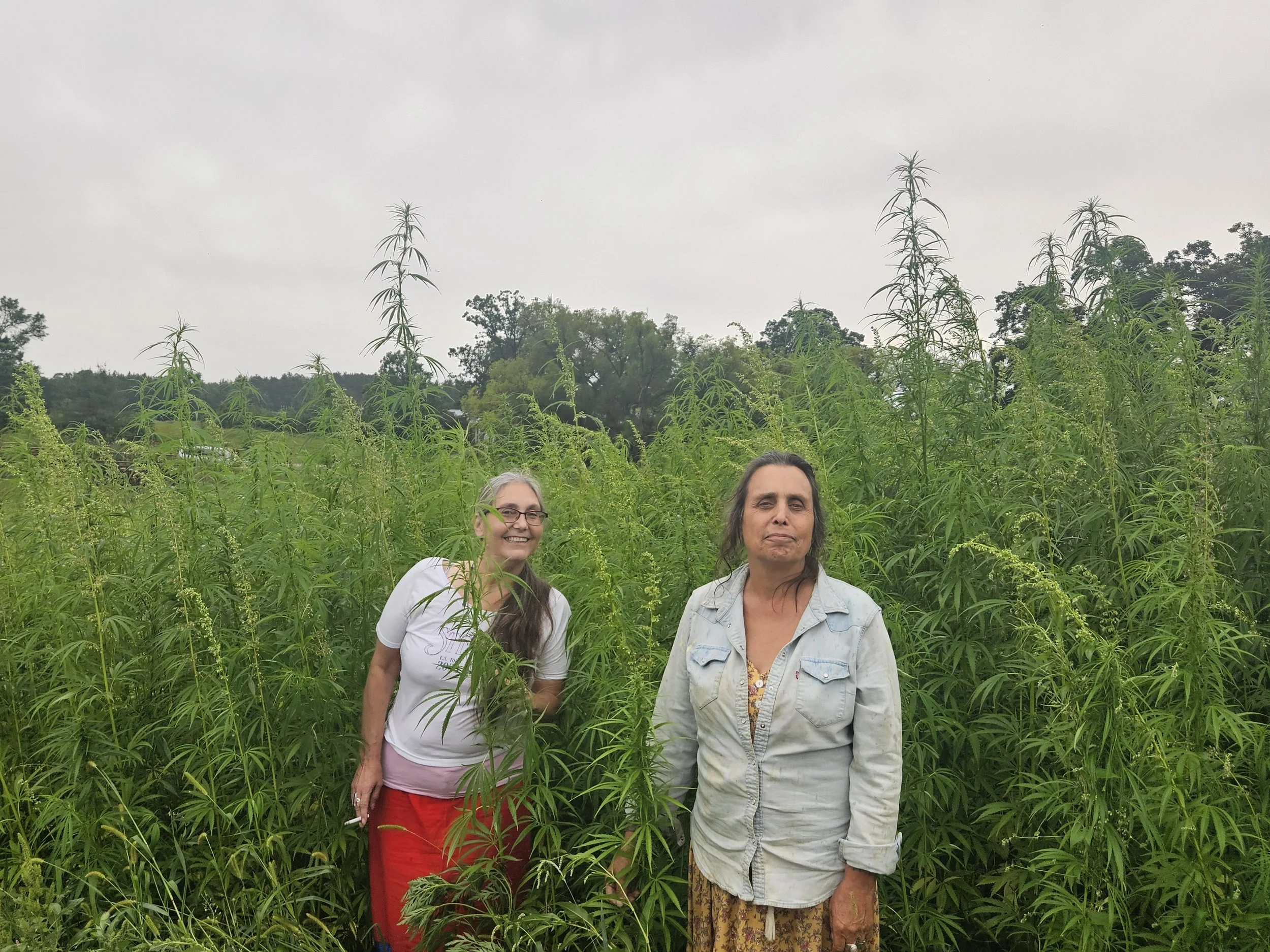
Tami Liberty and Winona LaDuke in her hemp field
Hemp Seed Varieties
Hemp seed diversity was retained by most of the Northern European countries - Romania, Poland, Ukraine, France, Italy as some of them, although the largest hemp producing country in the world is China, with merely 70,000 acres of hemp! China has an integrated hemp industry, as does France, with si. Many countries had robust hemp economies until prohibition, and unfortunately the Marijuana Prohibition Act of 1937 which criminalized industrial hemp in the US also was applied in Canada, and many trade partners of the US, particularly Japan, where hemp was a central fiber in the textile industry. Countries like Nepal and India, however, continued with hemp production, and retain seed stock. As we rebuild the North American hemp industry, it will be very important to grow out seed varieties which are appropriate for building materials, paper, textile products, food/oils and more. Many of the plants are multi purpose, but some specific characteristics are important for the end products. Here are some lists of hemp varieties:
References:
Lancaster Farming article (podcast summary):
Lancaster Farming. (2024, May 22). Czech your hemp with Hana Gabrielová [Podcast]. Lancaster Farming Industrial Hemp Podcast. https://www.lancasterfarming.com/farming-news/hemp/czech-your-hemp-with-hana-gabrielov/article_ae96bbbe-1837-11ef-b78f-cb78271aff34.html
Polish Hemp Program website:
Polish Hemp Program. (n.d.). Polish Hemp Program. https://www.polishhempprogram.com/
Horizon Hemp Seeds – Hemp Varieties page:
Horizon Hemp Seeds. (n.d.). Our hemp varieties. https://www.horizonhempseeds.com/our-hemp-varieties
Legacy Hemp – Homepage:
Legacy Hemp. (n.d.). Legacy Hemp. https://legacyhemp.com/
Hemp Traders – SEED-04B product page:
Hemp Traders. (n.d.). SEED-04B: Han NE Chinese fiber planting seed. https://www.hemptraders.com/SEED-04B-p/seed-04b.htm
Seed Sovereignty in Action: IHCFCs Hemp Distribution Efforts
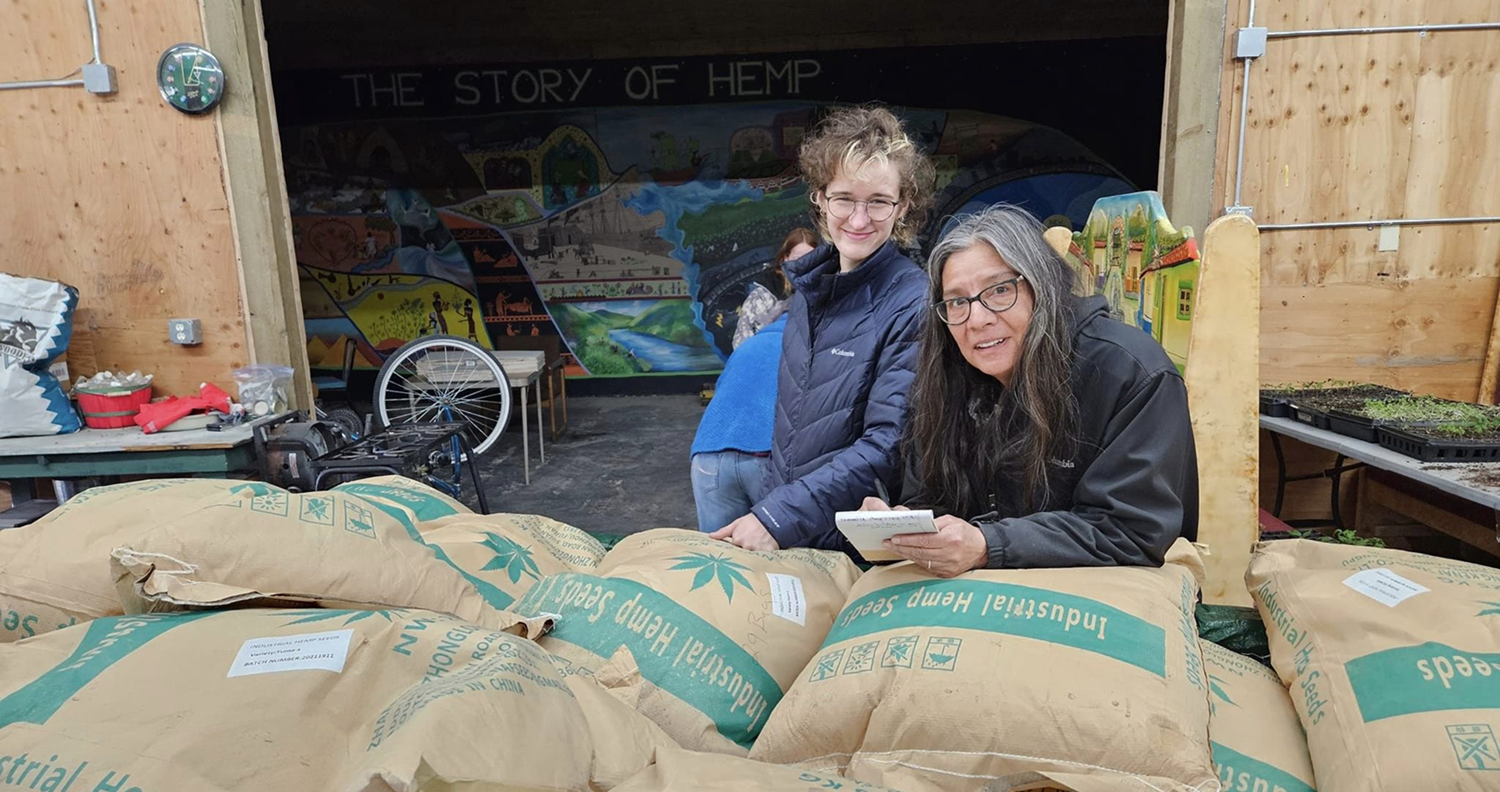
Kyra Bingham and Jana Danker distributing hemp seeds from the Anishinaabe Agriculture Institute farm on the White Earth reservation
Over the past four years, with ground-breaking support from the Bush Foundation, we have helped ignite a regional Tribal hemp movement—organizing growers, restoring seed diversity, and reclaiming Indigenous leadership in agriculture. What began as seed distribution has grown into a coordinated effort to rebuild local supply chains, strengthen intertribal collaboration, and advance true seed sovereignty. By placing hemp seeds directly into the hands of Indigenous farmers, we are not only expanding cultivation—we are rebuilding an economy rooted in land, relationship, and self-determination.
Donita Fischer of the Cheyenne River Sioux Tribe picks up hemp seeds supplied by the cooperative in 2025 supplied by the IHCFC.
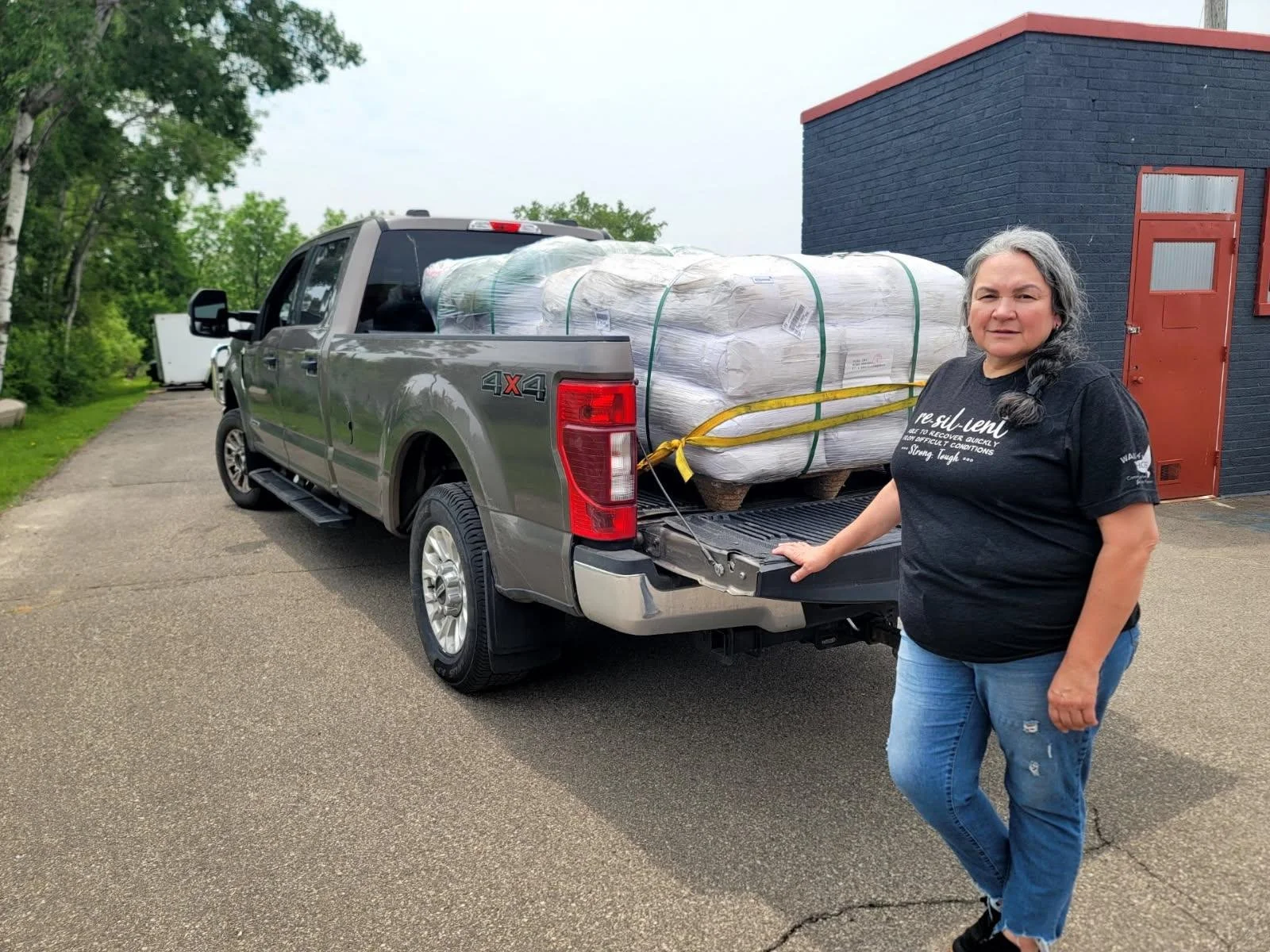
In partnership with the Bush Foundation the IHCFC began distributing seeds to tribal farmers and tribal government agriculture programs: White Earth Nation, Cheyenne River Sioux Tribe, Red Lake Band of Chippewa Indians, and Sisseton-Wahpeton Oyate of the Lake Traverse Reservation.
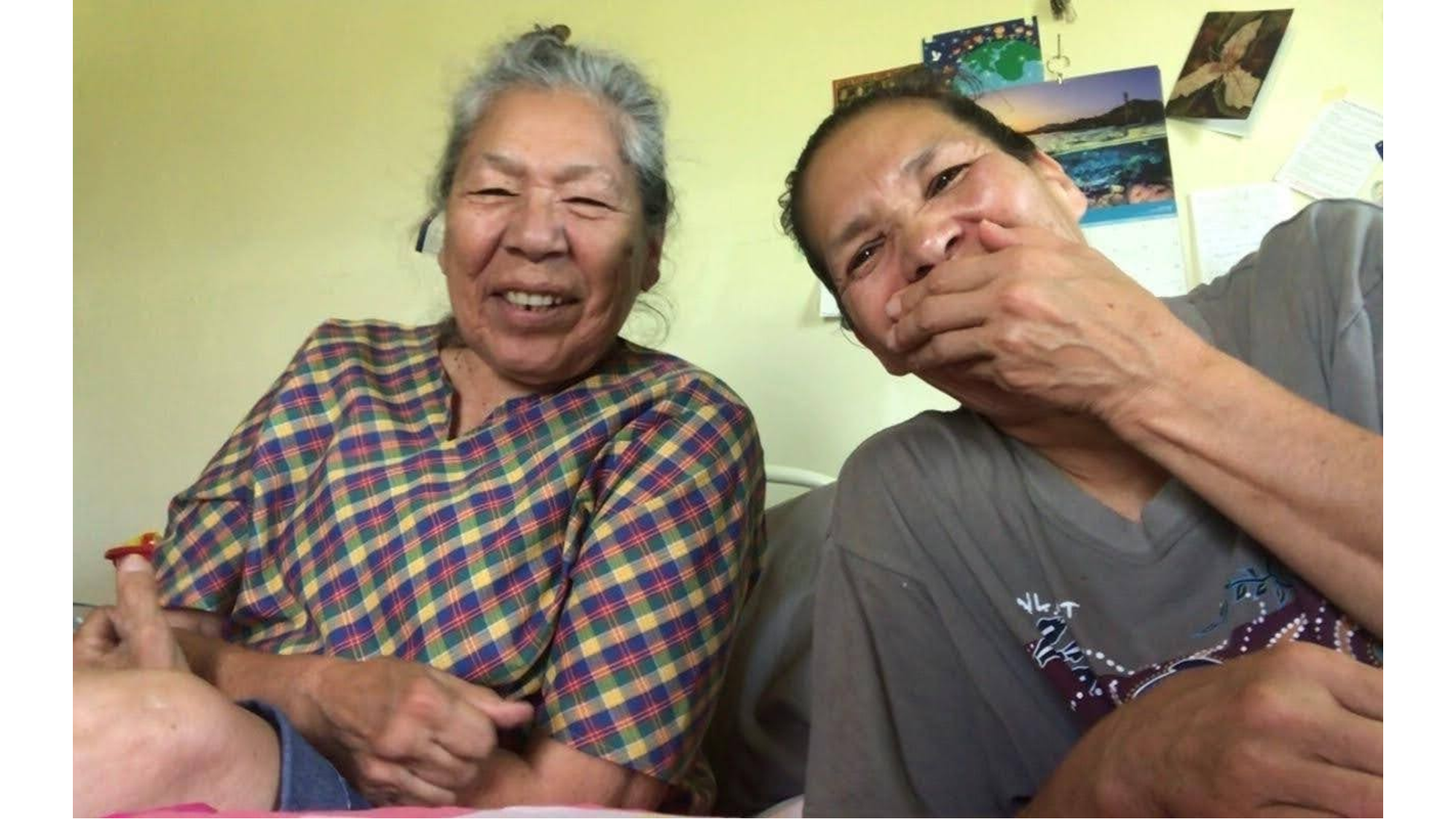
Indigenous Hemp Farmers: Madonna Thunderhawk and Marcella Gilbert (Cheyenne River Sioux Tribe)
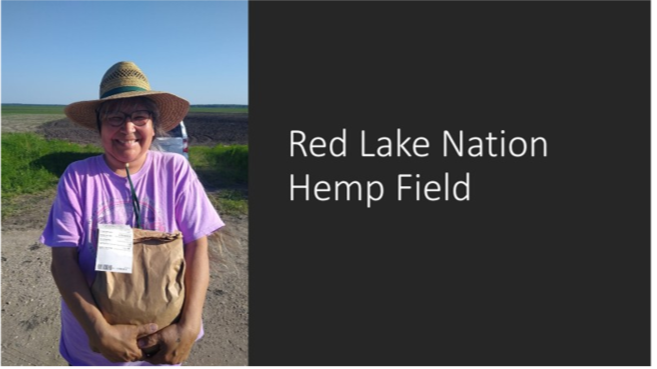
Cherilyn Spears Red Lake
Breon Lake (Lakota) with Hemp Seed delivery
At the outset of Red Lake’s hemp initiative, we supplied foundational seed to the Red Lake Tribal Agriculture Program, helping stimulate the Tribe’s return to hemp cultivation and agricultural self-determination.
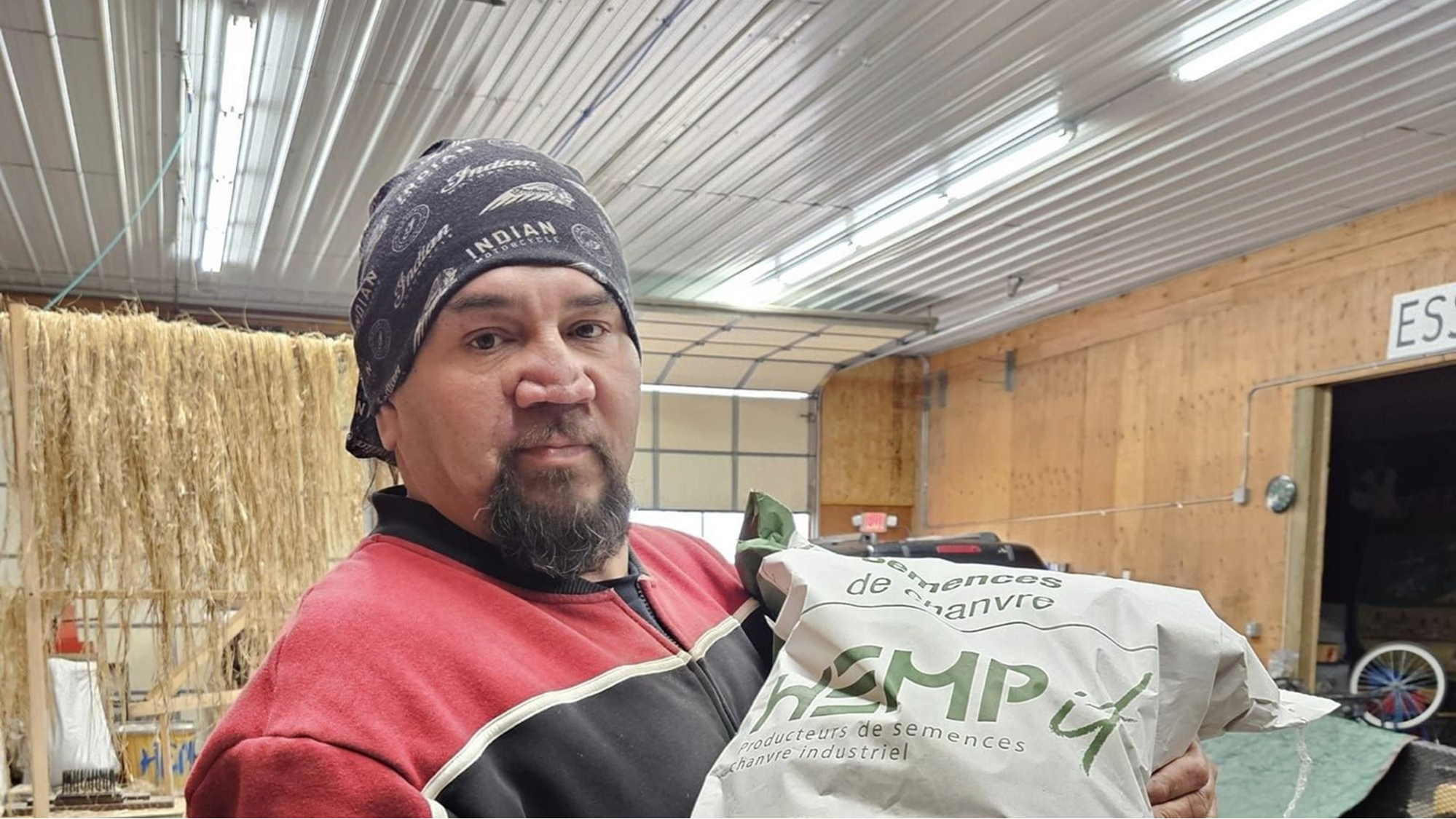
Seeds are the future
Seeds are the foundation of everything we do. To change the world, to build houses, to grow hemp feed for livestock, to grow hemp supplements for human consumption, and to make textiles and paper, you need seeds. Different products require different varieties, and resilient systems depend on diversity. That is how we grow the future.
Decades of prohibition created a severe bottleneck in hemp seed diversity. Agrobiodiversity is not just beneficial: it is essential. We plan to restore a wide range of hemp varieties to our lands so that some plants excel in oil production, others in fiber and textile quality, others in building materials, and still others in seed and feed applications.
To rebuild that diversity, we need dedicated seed growers. Farmers are needed to cultivate hemp not only for harvest, but for regeneration to grow the seeds that will power a resilient, Indigenous-led hemp economy for the next 7 generations and more.
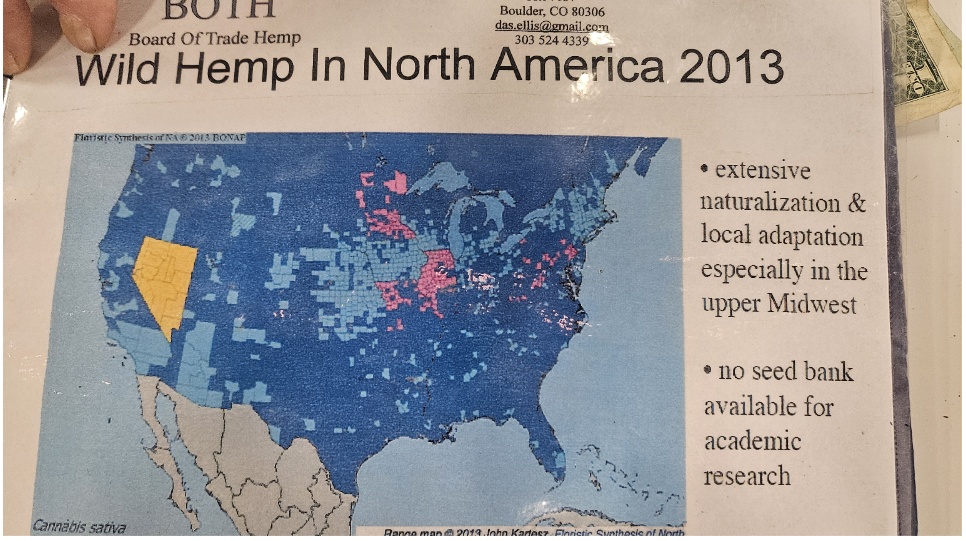
Wild Hemp Map