
Who we areIndigenous Hemp Cooperative is made up of farmers, tribal members and allies interested in hemp as a path forward
This path is communal, environmental, and spiritual. With hemp at the center, we all rise together.
Trailblaizers
John Trudell Santee talked about hemp across the world and had many meetings to develop the ideas of the industry. Alex White Plume grew hemp on the Pine Ridge reservation in l998, the first industrial hemp growing by an Indigenous nation in decades. He also made the first hempcrete house of this era.
Trudell’s work is carried on through Project Hempstead and Alex White Plume’s crop was seized by the DEA and a federal case ensued. In 2014, with the legalization of fiber hemp, Alex continued his work, all charges dropped. Listen to Alex’s update here.
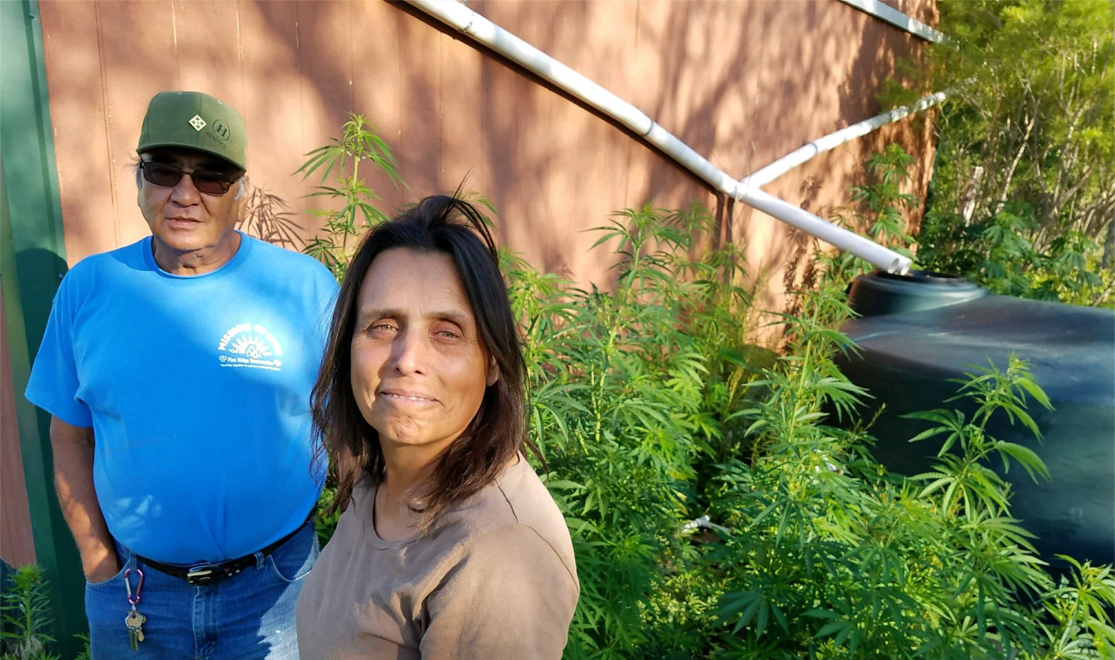
Photo of Alex White Plume and Winona Laduke
Above: Photo of Alex White Plume and Winona Laduke
Our journey
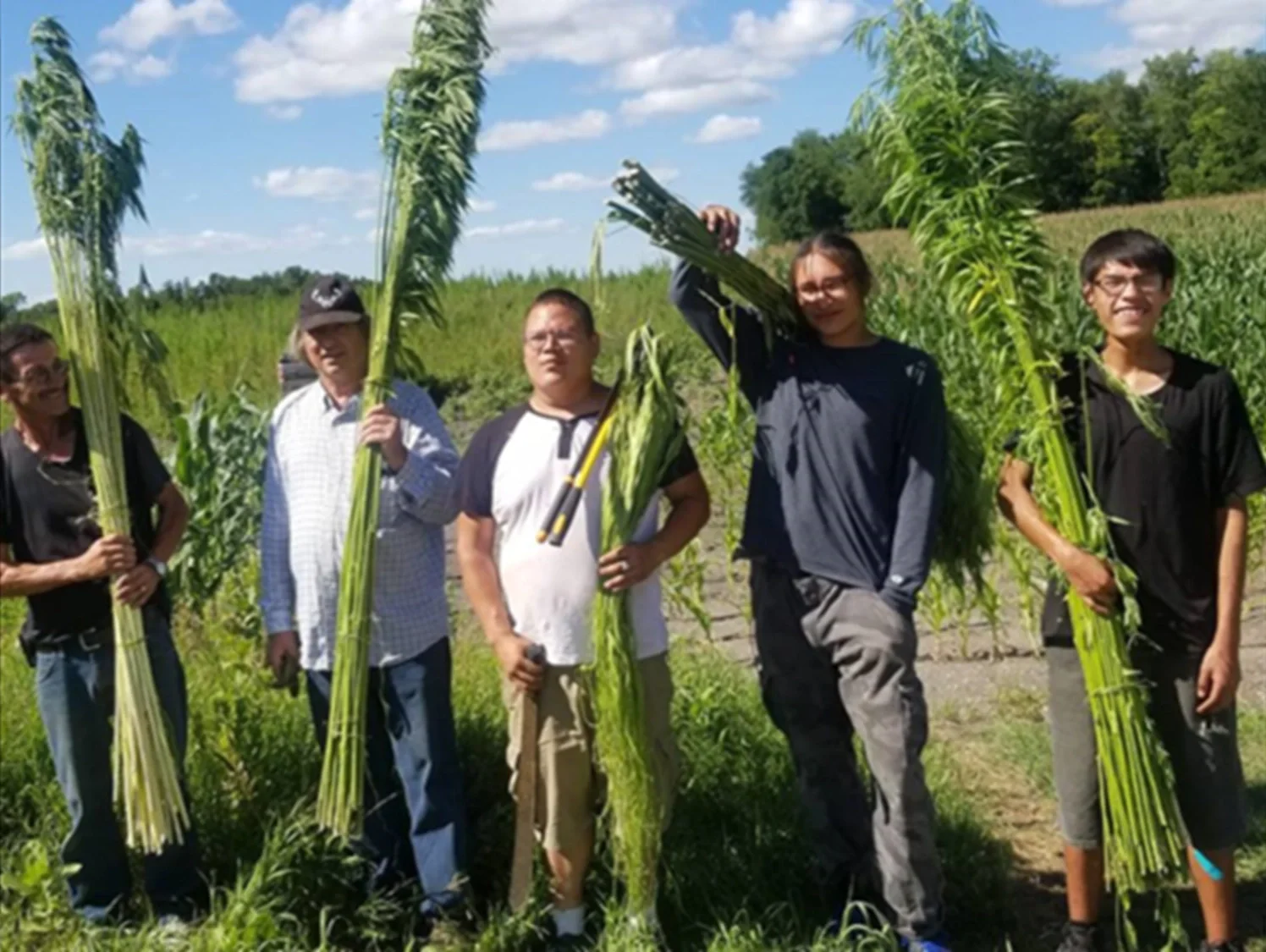
Left: Ron Chilton, Don Wedll, Jon Martin and Gwekaanimad Gasco from White Earth tribal nation’s first fiber hemp harvest
In 2015, some indigenous peoples began growing hemp again, under federal, or state permits, or with tribal permits, although most tribal governments had not yet developed hemp codes.
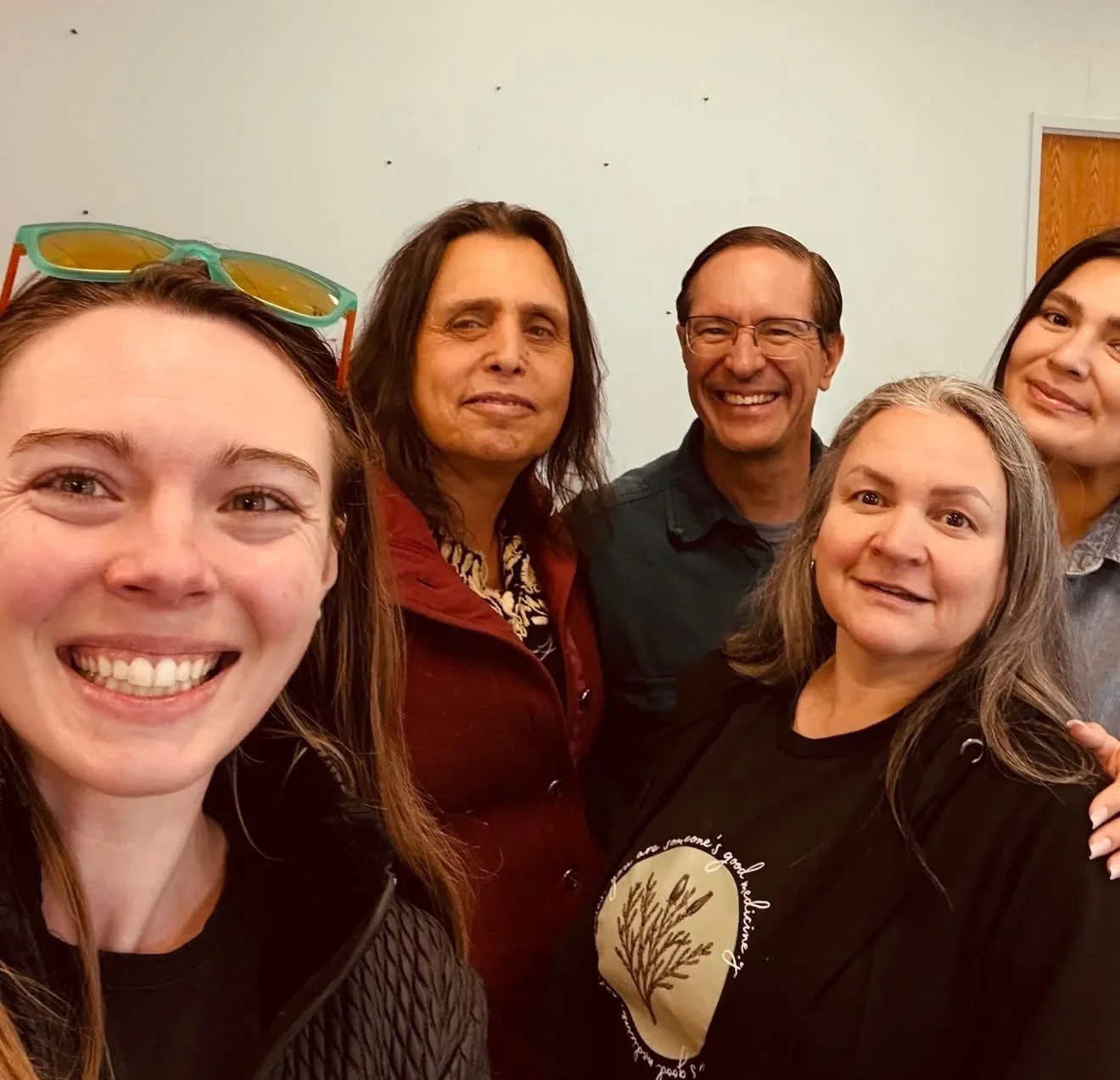
Right: Samantha Marino of Homeland Hempcrete; Winona LaDuke, Ken Meyer, hemp processor in South Dakota; and Donita Fischer from ACRE, an agriculture program on the Cheyenne River Reservation.
Two communities moved forward: White Earth Anishinaabe began tribal hemp growing in 2015, and in 2016, this hemp crop was taken over by tribal members.
We began to meet, to share seeds, dreams and join other farmers and members of the hemp community.
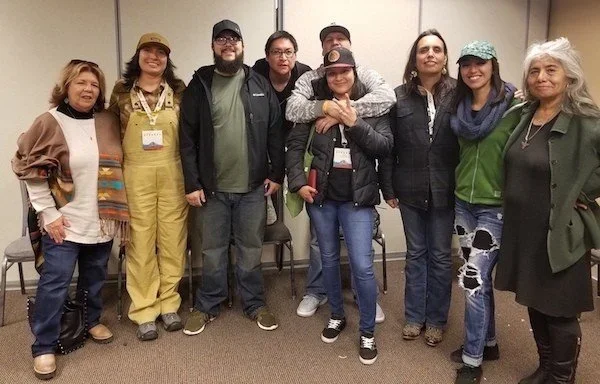
In 2018, we gathered at the NOCO Hemp Conference in Colorado, seen below.
We realized that we needed to work together to inform our tribal nations of the potential of hemp for housing, food, textiles and the future, and that we would be working with many allies to build tribal hemp infrastructure.
We began meeting and traveling to indigenous nations and gathering to bring together information, farmers and people and began to understand the potential and depth of this work. We met with tribal elected officials and farmers understanding that the seeds needed to be understood by farmers, who were best able to cultivate and rebuild tribal economies. We decided that we needed to form a cooperative.