
Hemp and Bioremediation
How to Heal Mother Earth with Hemp
There are many environmental problems today
created by the military-industrial complex and the linear economy, which take the natural world and turn it into waste.
Amongst the toxins produced by these industries are persistent organic pollutants, “forever chemicals,” petroleum and fossil fuel discharges, other toxins, and radioactive materials from mining and military uses.
The question is how to clean up the mess.
The first answer would be to not make a mess if you cannot clean it up, so let’s work on that for the future, with circular production systems. Approximately one quarter of all toxic waste sites in the US are adjoining Native communities, and significant exposure to energy industry byproducts, including radiation and fracking byproducts, plagues our ecosystems. Additionally, several military bases, left over from the previous round of Indian Wars, also contain toxic wastes and adjoin Native lands.
Minnesota faces numerous environmental challenges stemming from the military-industrial complex and a linear economy that extracts resources and generates persistent waste.
Industrial, mining, chemical, and military activities have left a legacy of contamination across the state of Minnesota, including persistent organic pollutants (POPs), per- and polyfluoroalkyl substances (PFAS), petroleum discharges, heavy metals, and radioactive materials from uranium and taconite mining (EPA, 2023b; MDH, 2023; MPCA, 2023a, 2023c). PFAS contamination in the Twin Cities metro area, legacy mining impacts in northern watersheds, and pipeline risks across rivers and wetlands demonstrate how linear production and extraction continue to affect Minnesota’s ecosystems. Tribal Nations—including Red Lake, White Earth, Leech Lake, and Mille Lacs—are disproportionately impacted, as multiple Superfund sites and legacy military facilities are located near or adjacent to their lands (EPA, 2023c; GAO, 2020; MPCA, 2023c).
Addressing these harms requires both cleanup and structural change.
Preventing future contamination through circular, regenerative production systems—where materials are reused, soils are restored, and industrial processes are designed with ecological limits in mind—is essential (Geissdoerfer et al., 2017). In Minnesota, integrating regenerative agriculture, such as industrial hemp cultivation, with local processing and manufacturing offers a pathway to restore degraded lands, protect water, and rebuild resilient regional economies. Such approaches combine environmental remediation with climate-aligned production and Indigenous environmental justice, turning legacy contamination into an opportunity for regeneration rather than continued degradation.
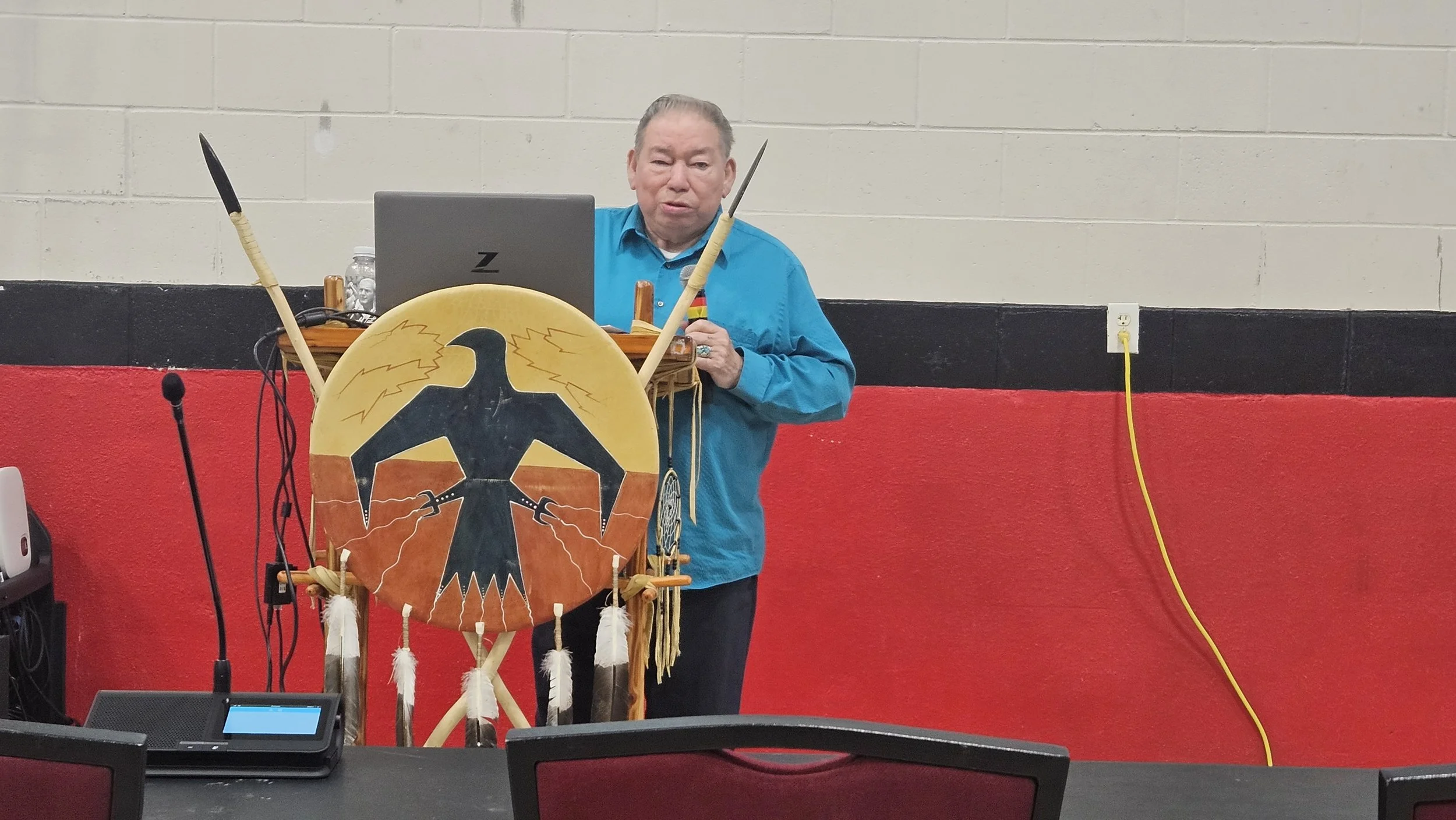
Vice Chief Richard Silliboy at the Hemp Conference
Hemp is part of the healing medicine for these wounds.
Its bioremediation power comes from its very stems and roots—fast-growing, deep, and strong (Cherney & Small, 2016; Small & Marcus, 2002).
Hemp’s deep roots move through the soil, aerating it and creating space for beneficial microbes to thrive, supporting the return of life to degraded land (Amaducci et al., 2015). This same root structure allows hemp to absorb toxins, heavy metals, and excess nutrients, rejuvenating and cleansing the soil (Rafati et al., 2020). Hemp heals the land quietly and powerfully, restoring vitality where it was lost and offering a regenerative approach to contaminated or depleted ecosystems.
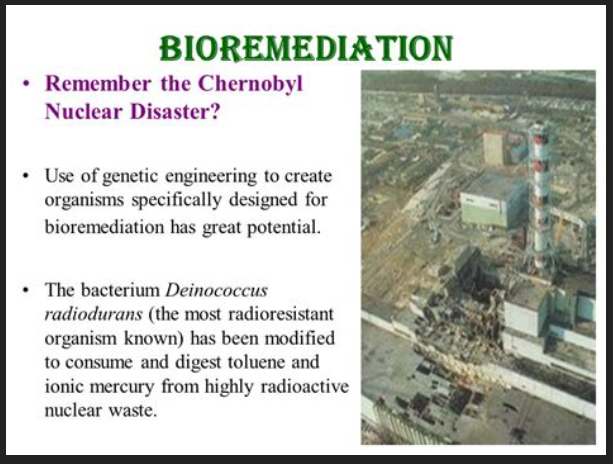
Cleaning up a mess is always harder than making the mess. That’s the story of the Chernobyl nuclear accident, the Loring Airforce Base and the Enbridge Pinewood spill site. All these toxic messes were made by industry, and in each one, hemp has been a part of cleaning it up. Hemp’s deep root systems and fast growth allow the plant to draw heavy metals out of the ground at a higher rate than most other plants.
Phytoremediation—a term coined by plant scientist Ilya Raskin—refers to the use of plants to remove or neutralize contaminants from soil, water, or air (Raskin & Ensley, 2000). Raskin was part of a team that tested hemp’s ability to accumulate heavy metals in contaminated fields near Chernobyl during the 1990s. According to team member Vyacheslav Dushenkov, the experiments were successful: “For the specific contaminants that we tested, hemp demonstrated very good phytoremediation properties” (Dushenkov, 1997, as cited in Rolling Stone, 2018). In 2001, a team of German researchers confirmed these findings, demonstrating that hemp could extract lead, cadmium, and nickel from land contaminated with sewage sludge (Amaducci et al., 2008). By 2011, hundreds of farmers in Puglia, Italy, were testing hemp in long-term efforts to remediate fields heavily polluted by a steel plant, further illustrating its potential as a practical tool for soil restoration (Rolling Stone, 2018).
Loring Air Force Base
The U.S. military is widely recognized as one of the largest polluters in the world, and many former military sites are located on lands historically taken from Native peoples, including former forts associated with the Indian Wars (Brugge & Goble, 2002; GAO, 2020). Mr. Richard J. Silliboy, a member of the Aroostook Band of MicMac, which gained federal recognition in 1991, explains the background of The Loring Air Force Base (AFB) in Aroostook County, Maine, a formally active base from 1947 through 1994.
“We received 800 acres from the United States Air Force, which included part of the Loring AFB. The part that we received was supposed to have been cleaned, but there's still a lot of ground there that I believe is contaminated. Starting in 2019, a group of community activists, research scientists, and tribal members came together to test methods for cleaning the land. Specifically, the 800 acres the MicMac received included a former firefighting training site that is full of substances called PFAS, one of the most prevalent toxins in the industrial world” (Silliboy, 2023).
A collaborative effort emerged among tribal members, community organizations, and researchers to address this contamination. Upland Grassroots, a community-based organization focused on bioremediation, is leading initiatives to explore regenerative cleanup strategies. Ms. Chelli J. Stanley explained the organization’s goals in an interview:
.
“The goals are to learn if fiber hemp can clean PFAS chemicals from soil and to learn what hemp does with the chemicals—where does it store them, does hemp break them down at all—and then use that knowledge to clean polluted soil. We decided to work on PFAS because it was the chemical that best fit everyone's needs. It was within the research interests of the scientists at the Connecticut Agricultural Experiment Station (CAES) we are working with and has polluted the land that the Micmac Nation are concerned about” (Stanley, 2023).
Dr. Sara L. Nason of CAES adds, “Specifically, we are testing the use of fiber hemp plants for phytoremediation of per- and polyfluoroalkyl substances (PFAS). PFAS are a class of emerging contaminants that are highly toxic at low concentrations and are frequently found on former military bases owing to their use in firefighting foams (Hagstrom et al., 2021). They are often called ‘forever chemicals,’ as they are highly resistant to degradation. Part of the land acquired by the MicMac people was formerly used as a firefighting testing area. The U.S. Air Force has detected concerning levels of PFAS in groundwater at this site, but did not conduct any remediation (Baker, 2018). There are limited technologies available for removing PFAS from soil (Mahinroosta & Senevirathna, 2020). Phytoremediation, although minimally tested for PFAS, is an appealing option due to low costs and the potential for community involvement. Hemp is a large, fast-growing plant that has been reported as an effective remediator for other types of contaminants (Campbell et al., 2002; Linger et al., 2002; Ahmad et al., 2016). Therefore, we set up a series of field tests to assess the potential for hemp to remove PFAS from the soil at Loring AFB” (Nason, 2023).
In these tests, the team focused on perfluorooctane sulfonic acid (PFOS), which was found at up to 150 ppb in the soil, along with many other PFAS compounds. Over 70 different PFAS were identified at the site (Nason et al., 2020). Field results from 2020 showed that PFOS concentrations decreased in hemp growth plots, while earlier 2019 data demonstrated bioaccumulation of several PFAS in hemp tissue. Shorter-chain compounds accumulated more readily than long-chain compounds, consistent with findings reported in other studies (Ghisi et al., 2019). To date, this work has contributed to four publications on PFAS remediation (Koelmel et al., 2020, 2021; Nason et al., 2020; Hagstrom et al., 2021) and two funded grant proposals, with more in progress. The project has also sparked further community-driven research initiatives.
Phytoremediation
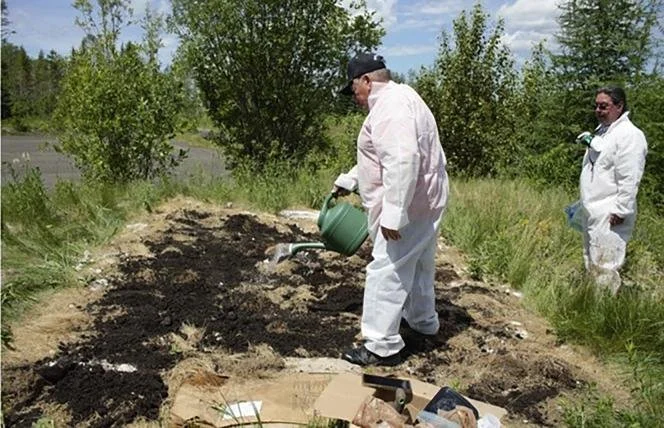
Richard Silliboy (left) and Norman Barnard (right) participated in the 2020 planting efforts, wearing Hazmat suits for safety during the PFAS fieldwork. The results demonstrate that hemp does have phytoremediation potential, while also highlighting the need for continued research.
“Working on this project made me appreciate what small groups of driven people and communities are capable of and the extremely beneficial results that can come from collaboration. Many times, researchers enter an area as outsiders; this can skew data or produce projects that don’t actually help the people involved. Involving passionate community members and leaders to create projects within their own communities is the best way to achieve meaningful, locally beneficial results” (Blumenthal, 2023).
The study began in 2019, and enlisted University of Connecticut researchers as well.
A brief synopsis:
Dr. Nason: The primary contaminant at the study site is PFOS (perfluorooctane sulfonic acid), which we have found at up to 150 ppb in the soil, but many other PFAS are present as well… we identified over 70 total PFAS… (Nason et al., 2020). …In our 2020 field test, PFOS soil concentrations decreased in both hemp growth plots. Earlier data from 2019 showed that several PFAS were accumulated in hemp tissue, and that the shorter-chain compounds showed greater bioaccumulation than long chain, similar to what has been reported in other literature (Ghisi et al., 2019). So far, there are four publications related to PFAS (Koelmel et al., 2020, Koelmel et al., 2021; Nason et al., 2020; Hagstrom et al., 2021) and two funded grant proposals, with more in progress! My work on this collaborative community project kick started all these additional activities. I am grateful to have learned so much.
The results show that hemp does bioremediate, and also that more work is needed. “Our advice would be to not underestimate what can be done through community-driven projects—motivated volunteers can be incredibly effect,” Dr. Nason from the Connecticut researchers said in an interview.“ Ms. Blumenthal, another researcher said this: ”Working on this project made me appreciate what small groups of driven people and communities are capable of and the extremely beneficial results that can come from community collaboration. Many times, researchers come into an area as outsiders; this can result in skewed data or projects that don't actually help many of the people the research might be based around. I think involving passionate community members and leaders to create projects within their own communities is the best way to have results that can help solve problems on the local level.”
The Pinewood Enbridge Spill Site
Enbridge is the largest oil pipeline company in North America, with six lines crossing Anishinaabe territories and delivering tar sands oil to markets across the continent (Enbridge, 2023). The company has a long history of spills, including the 1999 Grand Rapids spill and the 2010 Kalamazoo River spill, and continues to experience incidents in northern regions, with a 70,000-gallon spill reported in Wisconsin in 2024 (Wisconsin Department of Natural Resources [WDNR], 2024). Historical spills in 1979 left approximately 400,000 liters of oil in the unsaturated zone and near the water table, despite cleanup efforts completed in 1980. This residual oil remains a source of contamination to a shallow outwash aquifer, moving as a separate fluid phase, as dissolved petroleum constituents in groundwater, and as vapors in the unsaturated zone. Native microbes are partially breaking down the petroleum derivatives into carbon dioxide, methane, and other biodegradation products (Cozzarelli et al., 2017). In 2024, researchers from the University of Minnesota Department of Hydrology, in collaboration with hemp phytoremediation specialists, launched a three-year study to evaluate the potential for hemp to remediate petroleum-contaminated soils and groundwater. The study documents hemp varietals, soil and water quality, and the uptake of hydrocarbons and associated heavy metals into stalks and foliage. The research anticipates that effective bioremediation may take up to three years to produce “clean stalks,” suitable for limited-use structural materials while minimizing exposure to residual hydrocarbons. Findings from this project aim to inform scalable, community-driven remediation strategies that combine industrial hemp with regenerative land management practices (Rafati et al., 2020; Ahmad et al., 2016).
References
Geissdoerfer, M., Savaget, P., Bocken, N. M. P., & Hultink, E. J. (2017). The circular economy—A new sustainability paradigm? Journal of Cleaner Production, 143, 757–768. https://doi.org/10.1016/j.jclepro.2016.12.048
Minnesota Department of Health. (2023). PFAS in Minnesota drinking water.
Minnesota Pollution Control Agency. (2023a). Contaminated sites and cleanup programs in Minnesota.
Minnesota Pollution Control Agency. (2023b). East Metro PFAS contamination.
Minnesota Pollution Control Agency. (2023c). Mining and water quality in Minnesota.
U.S. Environmental Protection Agency. (2023a). Superfund: National priorities list (NPL) sites in Minnesota.
U.S. Environmental Protection Agency. (2023b). Persistent organic pollutants (POPs).
U.S. Environmental Protection Agency. (2023c). Superfund and environmental justice.
U.S. Government Accountability Office. (2020). Tribal energy development: Federal support for remediation and cleanup of contaminated sites.
Amaducci, S., Gusovius, H.-J., Scordia, D., Liu, F., Zhang, Q., & Monti, A. (2015). Advances in hemp (Cannabis sativa L.) genetics, breeding and applications. Industrial Crops and Products, 68, 1–10. https://doi.org/10.1016/j.indcrop.2014.11.041
Cherney, J. H., & Small, E. (2016). Industrial hemp in North America: Production, politics and potential. Agronomy, 6(4), 58. https://doi.org/10.3390/agronomy6040058
Rafati, M., Ghaderi, N., & Ahmadi, H. (2020). Phytoremediation potential of hemp (Cannabis sativa L.) for heavy metal-contaminated soils: A review. Environmental Science and Pollution Research, 27, 12780–12793. https://doi.org/10.1007/s11356-020-08138-x
Small, E., & Marcus, D. (2002). Hemp: A new crop with new uses for North America. In J. Janick & A. Whipkey (Eds.), Trends in new crops and new uses (pp. 284–326). ASHS Press.
Amaducci, S., Zatta, A., Pelatti, F., & Venturi, G. (2008). Phytoremediation potential of industrial hemp (Cannabis sativa L.) for heavy metal-contaminated soils. Environmental Pollution, 153(3), 745–751. https://doi.org/10.1016/j.envpol.2007.09.028
Dushenkov, V. (1997). Hemp for phytoremediation. In R. Raskin & B. D. Ensley (Eds.), Phytoremediation of toxic metals: Using plants to clean up the environment (pp. 123–137). John Wiley & Sons.
Raskin, I., & Ensley, B. D. (2000). Phytoremediation of toxic metals: Using plants to clean up the environment. John Wiley & Sons.
Rolling Stone. (2018, March 14). The miracle crop that can clean toxic soil: How hemp could save the planet. Rolling Stone. https://www.rollingstone.com/culture/culture-news/hemp-phytoremediation-planet-2018-123456
Ahmad, M., Rajapaksha, A. U., Lim, J. E., Zhang, M., Bolan, N., Mohan, D., … Ok, Y. S. (2016). Phytoremediation of heavy metals: Recent advances and future prospects. Environmental International, 86, 85–98. https://doi.org/10.1016/j.envint.2015.10.038
Baker, B. (2018). PFAS contamination at Loring Air Force Base: A review of federal reports. Environmental Defense Institute.
Blumenthal, [First Initial]. (2023). Personal interview on community-driven PFAS remediation, Loring Air Force Base project.
Brugge, D., & Goble, R. (2002). The history of uranium mining and the Navajo people. American Journal of Public Health, 92(9), 1410–1419. https://doi.org/10.2105/AJPH.92.9.1410
Campbell, L. C., Arcenegui, V., Fumagalli, P., & Linger, P. (2002). Industrial hemp for phytoremediation of contaminated soils. Journal of Environmental Quality, 31(2), 539–546.
Ghisi, R., Vamerali, T., & Manzetti, S. (2019). Accumulation of PFAS in plants: A review. Environmental Research, 171, 36–48. https://doi.org/10.1016/j.envres.2019.01.017
Government Accountability Office. (2020). Tribal energy development: Federal support for remediation and cleanup of contaminated sites. https://www.gao.gov/products/gao-20-325
Hagstrom, D., Fair, P., & Carpenter, D. (2021). PFAS in military and industrial sites: Toxicology, pathways, and remediation challenges. Environmental Science & Technology, 55(6), 3450–3465. https://doi.org/10.1021/acs.est.0c07856
Koelmel, J., et al. (2020). Hemp phytoremediation of PFAS at Loring AFB. Journal of Environmental Management, 265, 110551.
Koelmel, J., et al. (2021). Follow-up study on hemp-based PFAS remediation. Environmental Science & Technology Letters, 8(12), 1003–1010.
Linger, P., Arcenegui, V., & Campbell, L. (2002). Hemp (Cannabis sativa L.) as a phytoremediation crop: Uptake of metals and organics. International Journal of Phytoremediation, 4(4), 329–342. https://doi.org/10.1080/15226510208500073
Mahinroosta, M., & Senevirathna, D. (2020). PFAS removal from soil and water: A review of available technologies. Journal of Environmental Management, 262, 110352. https://doi.org/10.1016/j.jenvman.2020.110352
Nason, S. L. (2023). Personal interview on hemp phytoremediation research, Connecticut Agricultural Experiment Station.
Nason, S. L., Koelmel, J., & Hagstrom, D. (2020). Field trials of hemp (Cannabis sativa L.) for PFAS removal from contaminated soil. Environmental Science & Technology, 54(15), 9548–9557. https://doi.org/10.1021/acs.est.0c01456
Silliboy, R. J. (2023). Personal interview on Loring Air Force Base contamination and PFAS remediation, Aroostook Band of MicMac.
Stanley, C. J. (2023). Personal interview on bioremediation and hemp phytoremediation strategies, Upland Grassroots.
U.S. Environmental Protection Agency. (2023). PFAS contamination: Guidance and cleanup. https://www.epa.gov/pfas
Ahmad, M., Rajapaksha, A. U., Lim, J. E., Zhang, M., Bolan, N., Mohan, D., … Ok, Y. S. (2016). Phytoremediation of heavy metals: Recent advances and future prospects. Environmental International, 86, 85–98. https://doi.org/10.1016/j.envint.2015.10.038
Cozzarelli, I. M., Baehr, A. L., & Bullen, T. D. (2017). Petroleum hydrocarbon contamination in groundwater: Natural attenuation and microbial degradation. Groundwater, 55(6), 771–788. https://doi.org/10.1111/gwat.12516
Enbridge. (2023). Company overview and pipeline network. https://www.enbridge.com
Rafati, M., Ghaderi, N., & Ahmadi, H. (2020). Phytoremediation potential of hemp (Cannabis sativa L.) for heavy metal-contaminated soils: A review. Environmental Science and Pollution Research, 27, 12780–12793. https://doi.org/10.1007/s11356-020-08138-x
Wisconsin Department of Natural Resources. (2024). Enbridge pipeline spill report – northern Wisconsin. https://dnr.wisconsin.gov