
Textiles & Hemp
Hemp solves an onslaught of issues involved with current textile production as well as offers an avenue for indigenous practices to be re-integrated, celebrated and valued in harmony with the Earth.
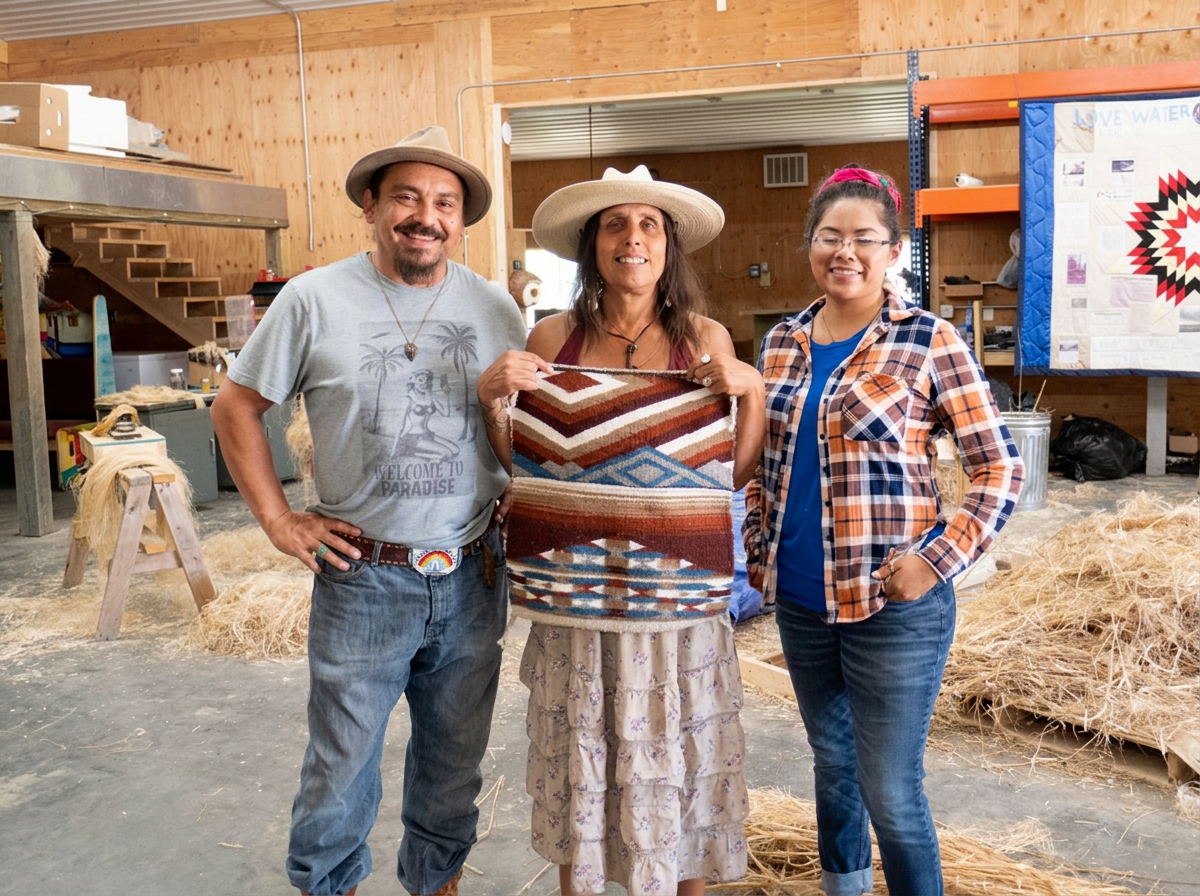
Ira Vandever, Winona LaDuke and weaver, Shay Vandever. Shay went on to produce more hemp/wool textiles including a commissioned piece which appeared in the New York Fashion Show in 2023 and later at Indian Market Fashion Show.
The problemWith the rise of fast fashion — driven by constantly changing collections and inexpensive offerings from big retailers — the fashion industry has become a major contributor to global greenhouse gas emissions and pollution.
Textile production alone emits about 1.2 billion tonnes of CO₂ equivalent annually, exceeding the emissions from all international flights and maritime shipping combined (Textile Recycling Association, 2025; Rawshot, 2025). The fashion sector is responsible for roughly 8–10% of global greenhouse gas emissions, placing it among the world’s most polluting industries (ZipDo Education Reports, 2026).
The impacts vary by material. Synthetic fibers such as polyester — now the most widely used textile fiber — generate significantly higher emissions than natural fibers as they are produced by fossil fuels and crude oil. A polyester shirt typically has a carbon footprint of 5.5 kg CO₂e, compared with 2.1 kg CO₂e for a cotton shirt (Gitnux, 2026). Cotton production is resource-intensive, requiring large amounts of land, water, and chemical inputs, which contribute to pollution and habitat loss (Scientific American, 2025).
Fast fashion’s rapid production and disposal cycle fuels enormous waste and environmental degradation.
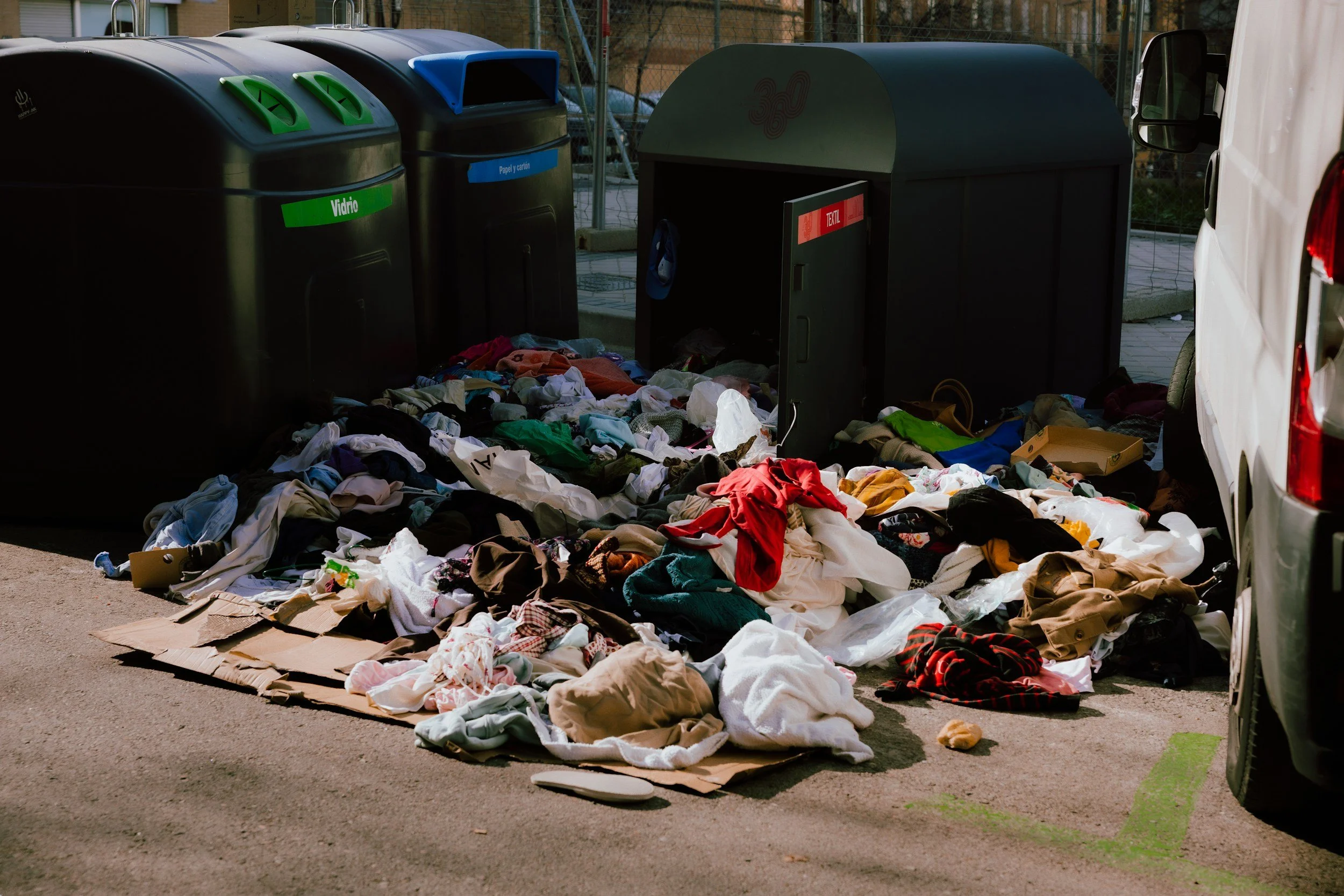
Recycling and reuse remain extremely limited: less than 1% of textiles are recycled back into new garments, and large volumes are discarded shortly after production or purchase, adding to landfill and incineration burdens
(ZipDo Education Reports, 2026; Textile Recycling Association, 2025). Meanwhile, microfibers shed from synthetic textiles during washing are increasingly detected in waterways and marine environments, posing emerging risks to ecosystems and food systems (Worldmetrics.org, 2026).
These intersecting environmental harms — from carbon emissions and chemical pollution to waste and microplastic contamination — underscore the urgent need to rethink the fast-fashion model and shift to more sustainable, circular textile systems.
The communityThe Anishinaabe Agriculture Institute continues to lead research in hemp processing from “seed to thread,” supported by the Minnesota Department of Agriculture, the Fibers Fund, the Windrose Foundation, and other donors (Fibers Fund, 2024).
This work integrates Indigenous knowledge of fiber production and textile traditions with innovative practices, building on collaborations with experienced community practitioners and exchanges with traditional weavers, including Hmong hemp weaving groups. By centering Indigenous expertise and cross‑cultural learning, the Institute is advancing scalable, regenerative methods for fiber processing that strengthen cultural heritage, create sustainable economic opportunities, and support an Indigenous‑led transition to a regenerative materials economy.
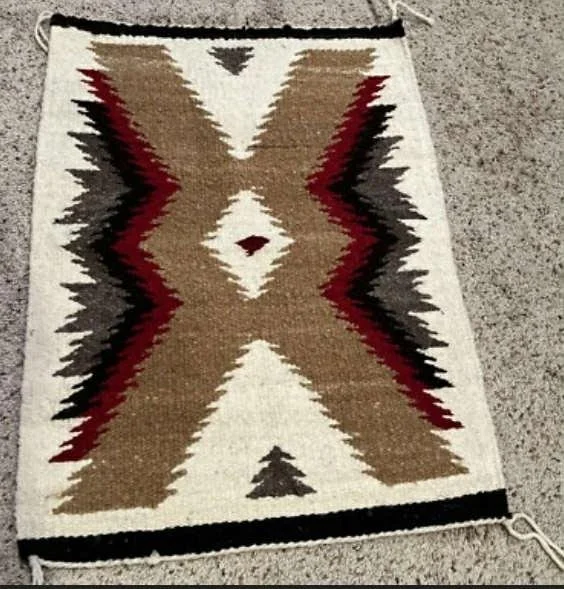
In 2026, we are working to produce a new prototype Diné Saddle Blanket using Winona’s Hemp and Diné Churro Wool. We will be doing this with our partners at Renaissance Fiber and Tuscarora Mills.
This project is a collaboration between the Anishinaabe Agriculture Institute, Winona’s Hemp, Turquoise Mountain Weavers, and the Indigenous Hemp Farmers’ Cooperative, working with heritage and innovative textile producers to create Indigenous‑designed weavings made from 60% Churro sheep wool and 40% hemp fiber. The Navajo‑Churro sheep breed produces long‑fleece wool that has been integral to Diné weaving traditions in North America for centuries and is prized for its unique fiber characteristics (Livestock Conservancy, 2025; Navajo‑Churro, 2023). The hemp fiber component represents the resurgence of domestic hemp cultivation and processing for sustainable textiles, supported by partners like Renaissance Fiber, which processes U.S.‑grown hemp into textile‑ready fiber (Renaissance Fiber, n.d.), and Tuscarora Mills, a U.S.‑based weaver of natural fiber fabrics including hemp blends (Tuscarora Mills, n.d.).
In 2026, we aim to produce 300 woven tapestries (4’ x 6’) in collaboration with these partners. This community‑driven initiative blends traditional knowledge with regenerative processing and manufacturing, with the long‑term goal of establishing an Indigenous‑led, North American textile infrastructure that supports cultural revitalization, climate-positive production, and economic self‑determination. Once proven, we intend to replicate this infrastructure or parts of it in our Indigenous territories to create an Indigenous standard driven North American textile industry which will provide the foundation to supplant the industrial and fossil fuel driven textile, paper and building materials industries.
We see this as a five-year project, with the hopes that by 2031, we will have the industry in our territory, sequester carbon at a high rate, and provide a vertically integrated economy for Indigenous communities.
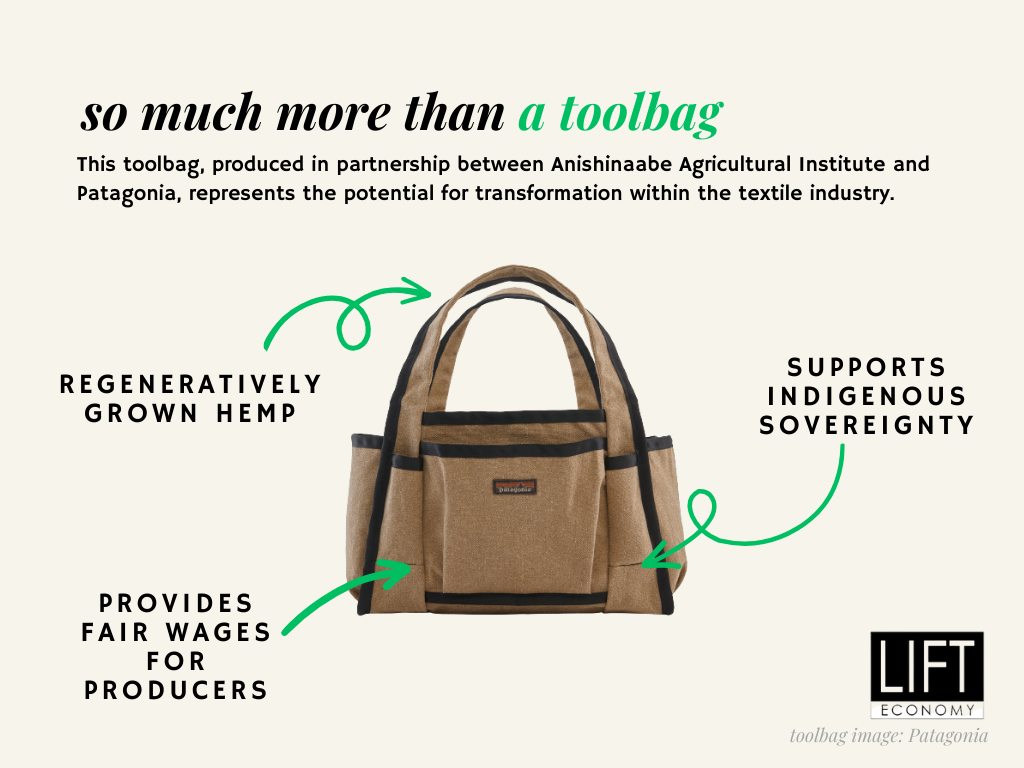
In 2023, we also produced a workbag with Patagonia using
our hemp and recycled materials.
Learn more about Winona’s Hemp x Patagonia
The SolutionCotton is not the answer either; hemp is
Cotton, long the backbone of global textiles, is not a sustainable solution for the future.
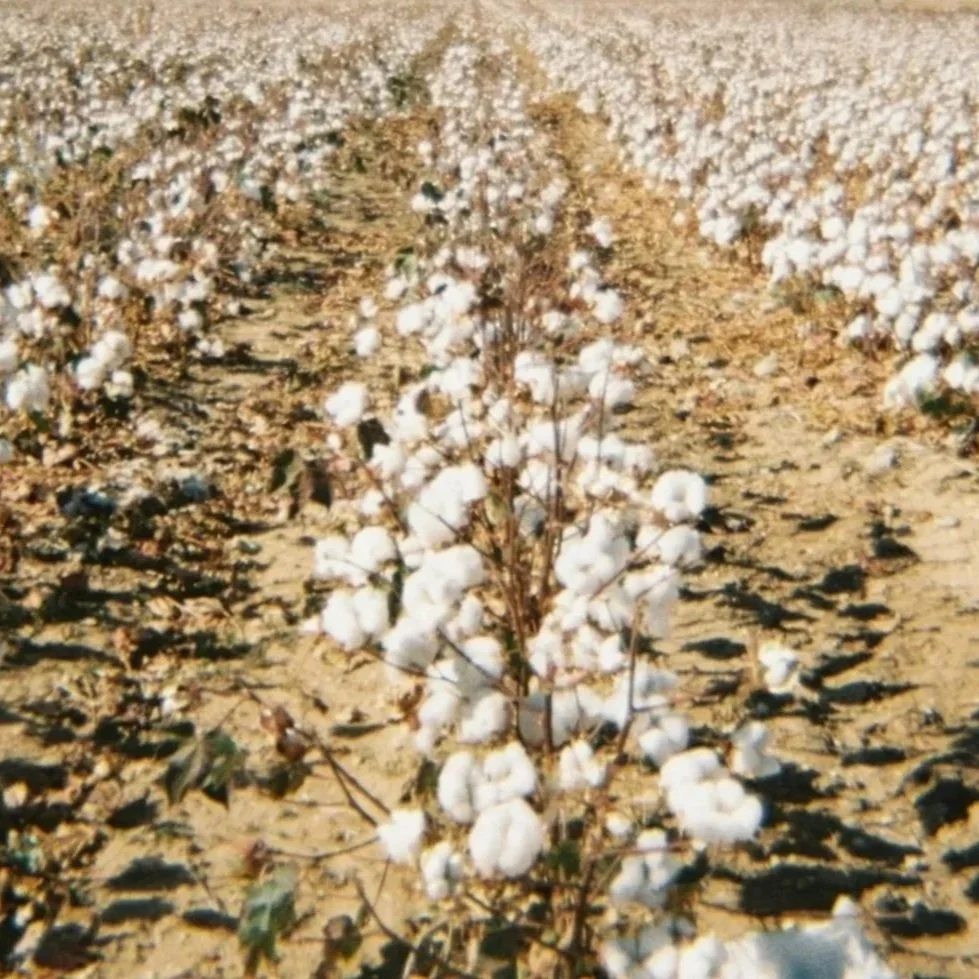
It accounts for roughly half of the world’s clothing fiber production — about 20 million tons annually — and is notoriously water‑intensive. It can take more than 5,280 gallons of water to produce the cotton needed for a single T‑shirt and pair of jeans, placing immense strain on freshwater resources (Evergreen Hemp, 2025; Hemp vs. Cotton – The Boonroom, 2025).
Much of the global cotton harvest depends on irrigated land, and conventional cotton cultivation relies heavily on agrochemicals: despite occupying only a small fraction of crop land, cotton production uses a disproportionate share of global pesticides and insecticides (Loom & Fiber, 2025; Evergreen Hemp, 2025). This reliance on synthetic inputs contributes to soil degradation, water pollution, and ecosystem harm.
Learn more: Read ‘What Your Cheap Clothes Cost the Plant’
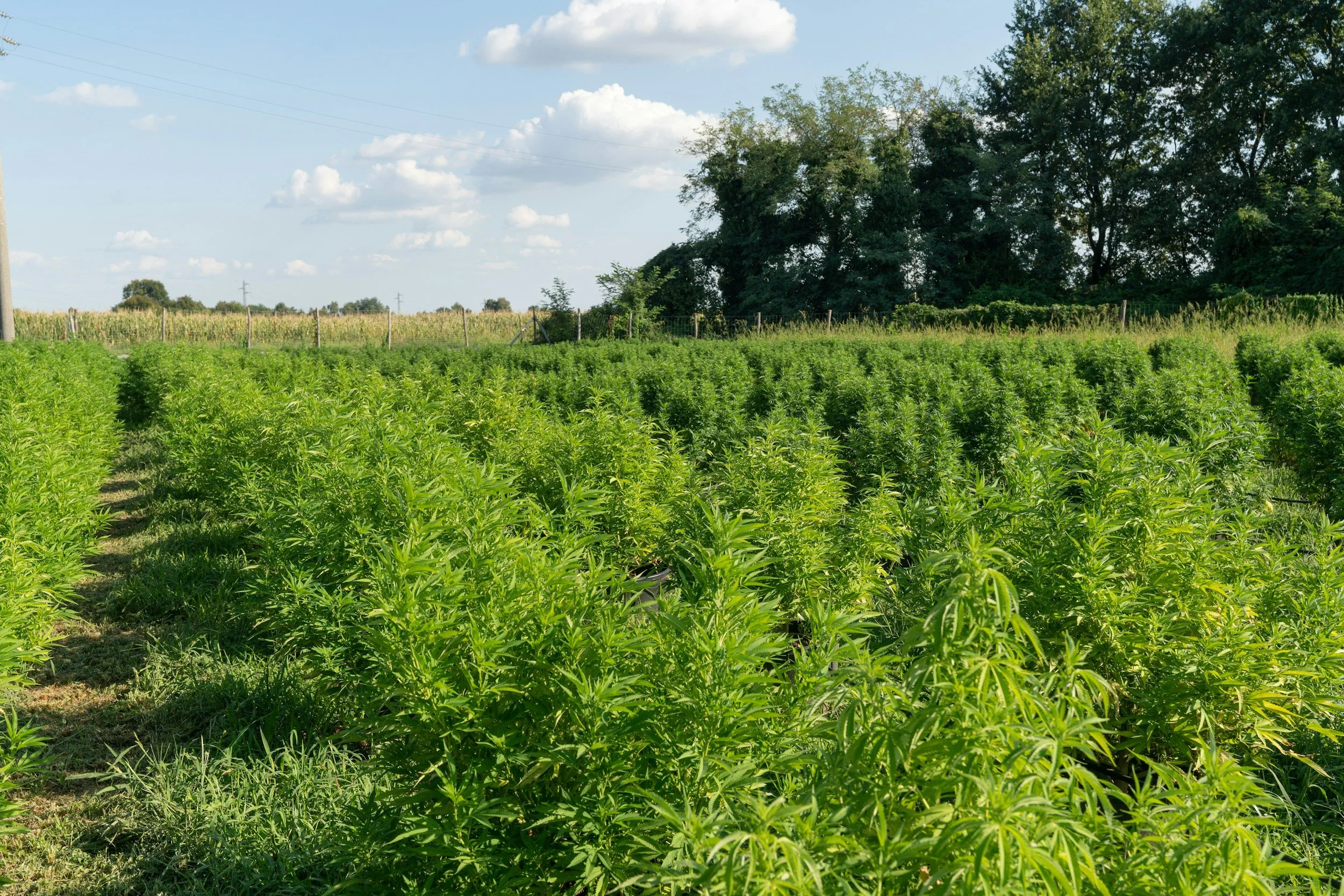
By contrast, hemp offers a dramatically more sustainable alternative:
Hemp requires far less water to grow — sometimes as little as 80 gallons per equivalent fiber yield compared with cotton — and most of its water needs can be met through natural rainfall rather than irrigation (Hemp Textiles – Pennsylvania Hemp Industry Council, 2026; Evergreen Hemp, 2025). Hemp is naturally resistant to pests and typically needs minimal or no pesticides or herbicides, which reduces chemical runoff and supports healthier soils (Hemp Textiles – Pennsylvania Hemp Industry Council, 2026; Cannabistrades.org, 2026).
Hemp also yields more fiber per acre. On average, one acre of hemp can produce as much fiber as two to three acres of cotton, providing a more efficient use of agricultural land (Hemp vs. Everything – HempwickBeeline.com, 2026; Cannabistrades.org, 2026). Its fibers are strong, durable, and long‑lasting, making hemp well‑suited for robust, high‑performance textiles (HempGenTech, 2024). Whereas cotton farming often depletes soil nutrients, hemp’s deep root structure can improve soil quality and carbon sequestration during growth.
These differences — lower water use, reduced chemical dependence, higher yields, and soil benefits — make hemp a compelling alternative to cotton for sustainable textiles and a key material in building a regenerative, low‑impact fiber industry.
Reshoring Textiles in Minnesota Through Regenerative Agriculture
Minnesota once supported a meaningful fiber-processing economy, including hemp milling operations that supplied rope, twine, and industrial textiles before federal prohibition in the mid-twentieth century (University of Minnesota Extension, 2019; Cherney & Small, 2016). Today we can reimagine the way it once was in.
Like much of the United States, Minnesota’s broader textile and light manufacturing base declined during the late twentieth century as production shifted overseas in response to lower labor costs and globalized supply chains (Autor, Dorn, & Hanson, 2016; Scott, 2015).
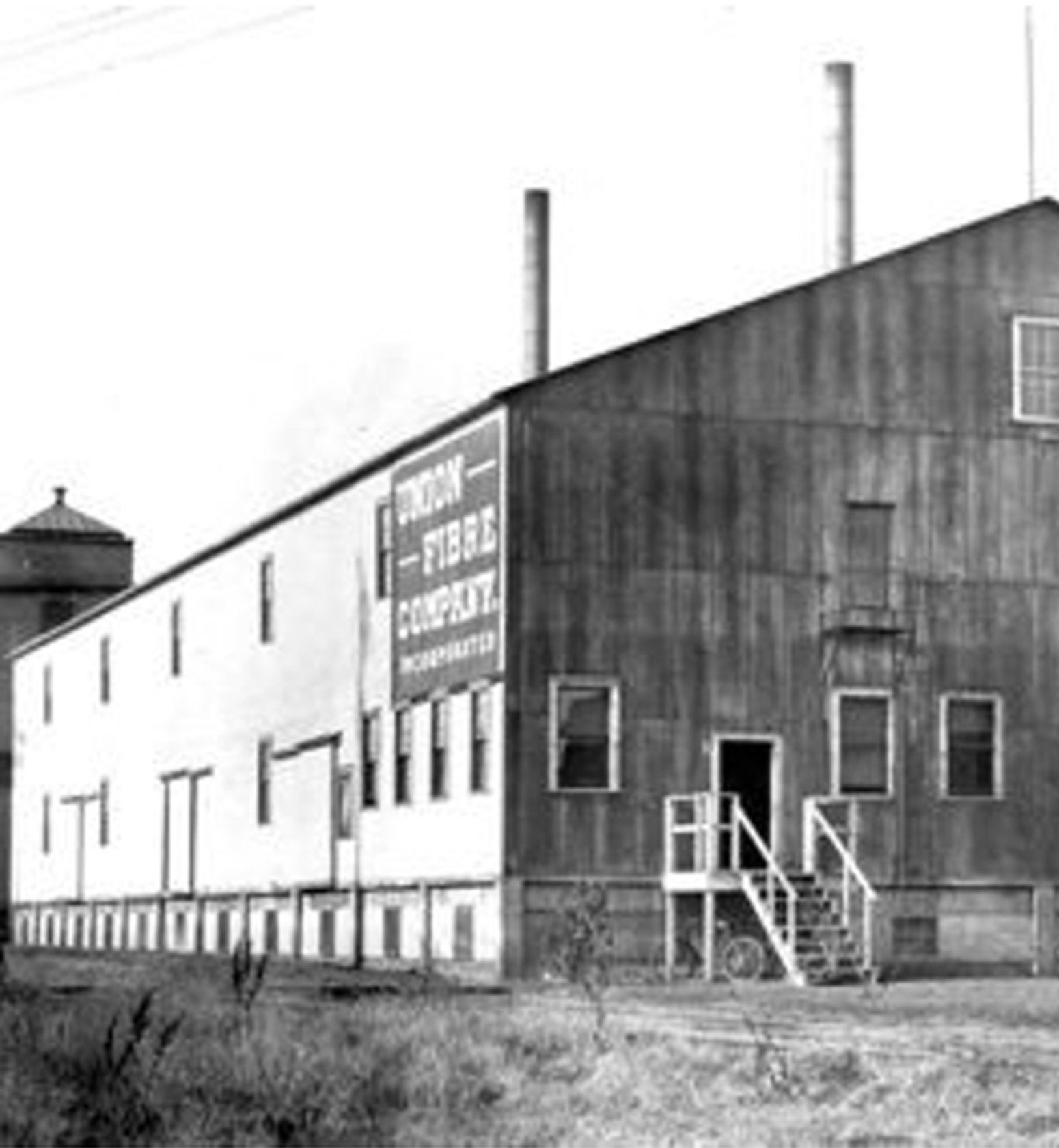
The offshoring of textile production contributed to long-term industrial contraction across the Midwest. Between 1994 and 2005, the United States lost more than 900,000 textile and apparel jobs, with ripple effects felt across regional supply chains, agricultural markets, and rural communities (Scott, 2015). Most U.S. textile companies either shutdown or moved abroad, and it seemed as though the U.S. textile industry would never make a comeback. This hit the U.S. Southeast particularly hard. As the Great Recession loomed, the only evidence of the once thriving industry were the old derelict factories — tall smokestacks, short ceiling heights, and creeping kudzu vines swallowing what was left of the buildings. For Minnesota, this meant the erosion of value-added processing capacity and the loss of vertically integrated agricultural manufacturing systems.
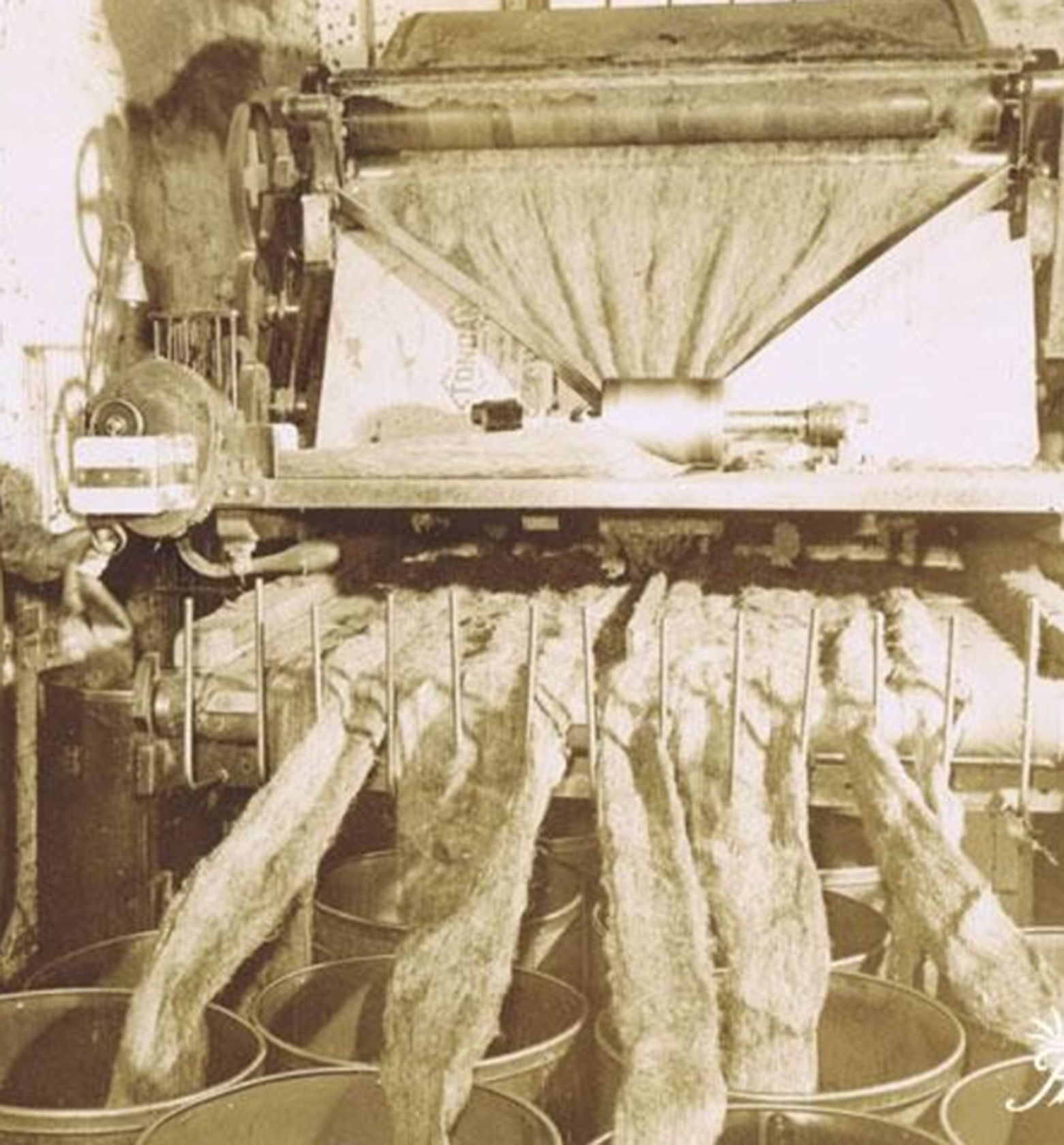
Things are changing, and textile production in North America is returning.
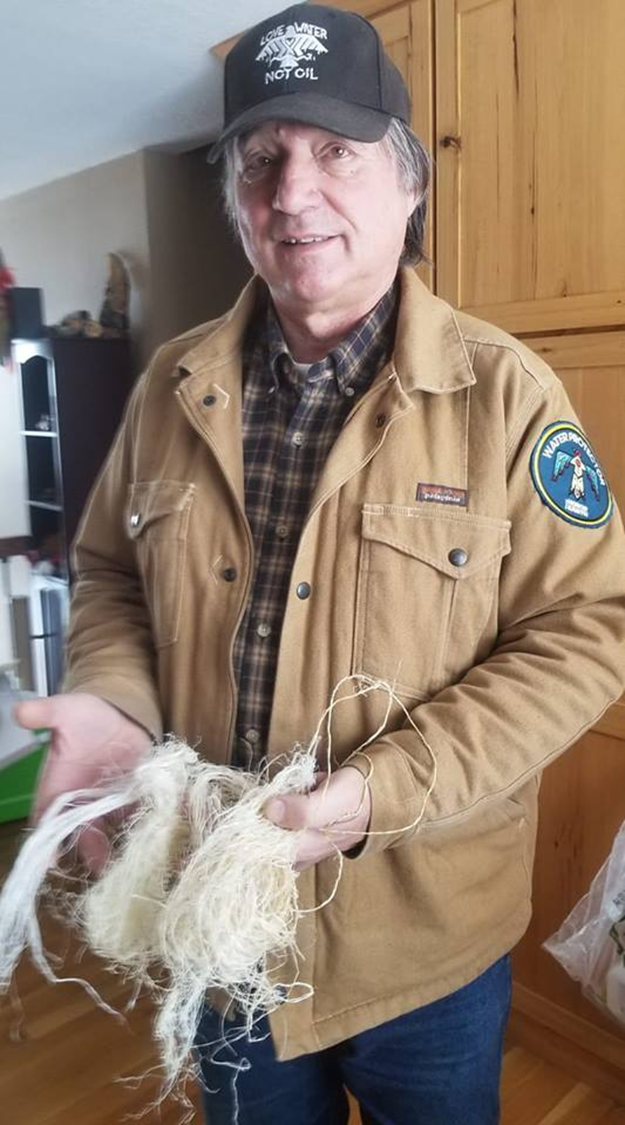
The U.S. textile industry saw $2 billion in capital investments in 2015. In addition to new greenfield investment, existing textile companies that weathered the downturn are retooling their businesses and automating the work process. The United States is currently the world’s third-largest exporter of textiles, Now we just need to rebuild the industry so that the materials are organic and grown here– that’s hemp. That’s the new green revolution. In short, hemp textiles were and are a huge potential for rebuilding an industry from the soil up, and that industry can be the New Green Revolution. Below David at Tuscarora Mills and his hemp thread.
Since passage of the Agriculture Improvement Act of 2018, industrial hemp cultivation has been reauthorized nationwide, allowing North American and specifically Minnesota producers to rebuild fiber production and processing infrastructure (U.S. Congress, 2018).
The Minnesota Department of Agriculture has since administered state hemp programs, reestablishing the regulatory pathway for commercial cultivation and processing (Minnesota Department of Agriculture, 2023). Reshoring textiles in Minnesota now presents an opportunity to integrate regenerative agriculture with advanced regional manufacturing. Industrial hemp can support diversified crop rotations and reduced input systems while contributing to soil health and carbon sequestration potential (Cherney & Small, 2016; Small & Marcus, 2002). When paired with in-state decortication, spinning, and textile production, hemp enables a vertically integrated fiber system rooted in Minnesota soil rather than overseas supply chains.
For climate and equity-focused funders, rebuilding Minnesota’s textile capacity through hemp represents a systems-level strategy:
Climate mitigation: Reduced transportation emissions and support for regenerative cropping systems.
Rural revitalization: Reestablishing value-added processing in agricultural regions.
Equitable ownership models: Cooperative and Tribal-led enterprises that retain wealth locally.
Supply chain resilience: Regionalizing fiber inputs for North American textile markets.
Rather than recreating a twentieth-century industrial model, Minnesota has the opportunity to build a climate-aligned textile economy that links regenerative farming, domestic milling, and community-based manufacturing. In this context, hemp textiles are not simply an agricultural commodity—they are a pathway to restoring regional industrial capacity while advancing carbon-conscious, locally rooted economic development.
References
Canvas. (n.d.). In Online Etymology Dictionary. Retrieved February 15, 2026, from https://www.etymonline.com/word/canvas
Astute Analytica. (2025, July 15). Hemp fiber market set to surpass valuation of US$ 30.13 billion by 2033 [Press release]. GlobeNewswire. https://www.globenewswire.com/news-release/2025/07/15/3115914/0/en/Hemp-Fiber-Market-Set-to-Surpass-Valuation-of-US-30-13-Billion-By-2033-Astute-Analytica.html
Livestock Conservancy. (2025). Navajo Churro sheep [Breed profile]. https://livestockconservancy.org/heritage-breeds/heritage-breeds-list/navajo-churro-sheep/
Navajo Sheep Project. (2017). Home. https://www.navajosheepproject.org/wool-and-weaving
Renaissance Fiber. (n.d.). Home. https://www.renaissance-fiber.com/home
Tuscarora Mills. (n.d.). About Tuscarora Mills. https://tuscaroramills.com/about-tuscarora-mills/
Gitnux. (2026). Sustainability in the clothing industry statistics. https://gitnux.org/sustainability-in-the-clothing-industry-statistics/
Rawshot.ai. (2025). Textile waste environmental impact statistics. https://rawshot.ai/statistic/textile-waste-environmental-impact
Textile Recycling Association. (2025). Position paper on extended producer responsibility and textile recycling. https://www.textilerecyclingassociation.org/wp-content/uploads/2020/10/TRA-Position-Paper-on-EPR.pdf
Worldmetrics.org. (2026). Fast fashion environmental impact statistics. https://worldmetrics.org/fast-fashion-environmental-impact-statistics/
ZipDo Education Reports. (2026). Fashion industry pollution statistics. https://zipdo.co/fashion-industry-pollution-statistics/
Scientific American. (2025). Fast fashion affects climate, exploits workers and creates enormous textile waste. https://www.scientificamerican.com/article/fast-fashion-affects-climate-exploits-workers-and-creates-enormous-textile-waste/
Cannabistrades.org. (2026). Facts about hemp. https://www.cannabistrades.org/pages/126‑facts‑about‑hemp?utm_source=chatgpt.com
Evergreen Hemp. (2025). Hemp clothing benefits & environmental comparison. https://evergreen‑hemp.com/hemp/hemp‑clothing‑benefits/
HempGenTech. (2024). Viability of the hemp fibre industry: Analysis of hurd and bast markets (pp. 1‑10). https://hempco.net.au/wp‑content/uploads/2024/09/Viability_of_the_hemp_fibre_industry_part_1_1726110107.pdf?utm_source=chatgpt.com
Hemp Textiles – Pennsylvania Hemp Industry Council. (2026). Hemp textiles: Know hemp. https://pahempindustry.org/hemp‑textiles‑know‑hemp/?utm_source=chatgpt.com
Hemp vs. Cotton – The Boonroom. (2025). Hemp vs cotton: Is hemp better than cotton?. https://theboonroom.com/blog/hemp‑vs‑cotton
Hemp vs. Everything – HempwickBeeline.com. (2026). Hemp vs cotton & other materials. https://hempwickbeeline.com/hemp‑vs‑everything
Loom & Fiber. (2025). Hemp vs cotton: Which fabric is healthier?. https://loomandfiber.com/blog/cotton‑vs‑hemp
Autor, D. H., Dorn, D., & Hanson, G. H. (2016). The China shock: Learning from labor market adjustment to large changes in trade. Annual Review of Economics, 8, 205–240. https://doi.org/10.1146/annurev-economics-080315-015041
Cherney, J. H., & Small, E. (2016). Industrial hemp in North America: Production, politics and potential. Agronomy, 6(4), 58. https://doi.org/10.3390/agronomy6040058
Minnesota Department of Agriculture. (2023). Industrial hemp program overview.
Scott, R. E. (2015). The high price of “free” trade: NAFTA’s failure has cost the United States jobs across the nation. Economic Policy Institute.
Small, E., & Marcus, D. (2002). Hemp: A new crop with new uses for North America. In J. Janick & A. Whipkey (Eds.), Trends in new crops and new uses (pp. 284–326). ASHS Press.
U.S. Congress. (2018). Agriculture Improvement Act of 2018, Pub. L. No. 115-334.
University of Minnesota Extension. (2019). Industrial hemp in Minnesota: Production and regulatory overview. University of Minnesota.